
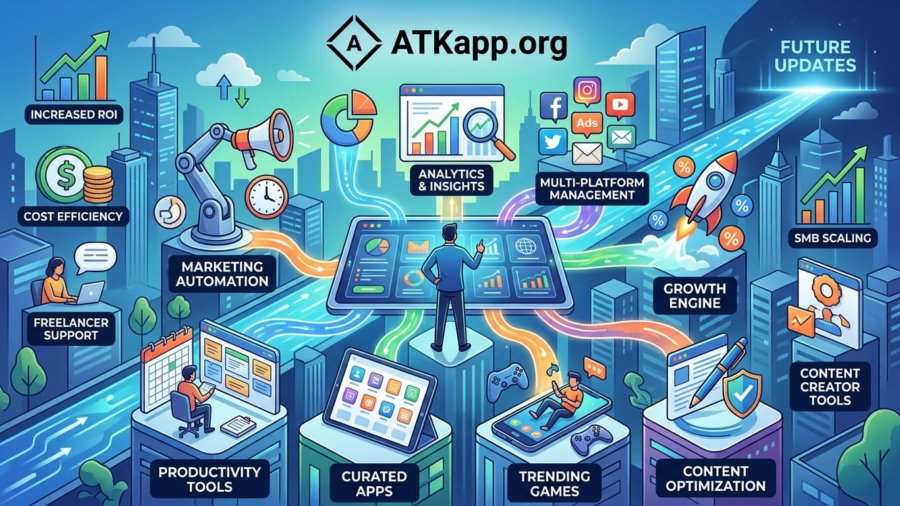
ATKapp platform interface showing best apps, games, and productivity tools alternative to Google Play Store

ATKapp: The Ultimate Platform for Smart Digital Growth in 2026

Introduction

In today’s fast-moving digital world, having the right tools can decide whether your online journey succeeds or fails. Businesses, freelancers, and digital marketers are constantly searching for platforms that simplify their workflow while delivering real results.

One such emerging solution is ATKapp.

If you are looking for a powerful, efficient, and scalable digital platform, this guide will help you understand everything about ATKapp, how it works, and why it can become your next growth engine.


What is ATKapp?

ATKapp platform interface showing best apps, games, and productivity tools alternative to Google Play Store
Explore ATKapp.org, your trusted platform to discover top apps, trending games, and powerful productivity tools in one place.

ATKapp is a modern digital platform designed to streamline online activities such as marketing, automation, and performance tracking. It combines multiple tools into a single system, helping users manage their digital presence more efficiently.

Instead of relying on multiple apps and services, ATKapp provides an all-in-one solution that saves time, reduces costs, and improves productivity.


Why ATKapp is Gaining Popularity

ATKapp is quickly becoming a preferred choice for digital professionals because of its simplicity and effectiveness.

Here’s why:

  • Easy-to-use interface for beginners and professionals
  • All-in-one platform for digital management
  • Cost-effective compared to multiple tool subscriptions
  • Scalable for startups, freelancers, and agencies
  • Designed for real-world results, not just features

In short, ATKapp focuses on performance, not complexity.


Key Features of ATKapp

ATKapp platform interface showing best apps, games, and productivity tools alternative to Google Play Store
Explore ATKapp.org, your trusted platform to discover top apps, trending games, and powerful productivity tools in one place.

1. Smart Dashboard

ATKapp offers a clean and intuitive dashboard where users can monitor all activities in one place. This helps in better decision-making and faster execution.

2. Automation Tools

Automation is the future, and ATKapp leverages it effectively. You can automate repetitive tasks, saving valuable time and effort.

3. Performance Analytics

Tracking performance is crucial. ATKapp provides detailed insights so you can measure results and optimize your strategies.

4. Multi-Platform Integration

ATKapp supports integration with multiple platforms, making it easier to manage different channels without switching tools.

5. User-Friendly Design

Even if you are new to digital tools, ATKapp ensures a smooth learning curve with its simple and intuitive interface.


How ATKapp Helps in Digital Marketing

Digital marketing requires consistency, strategy, and execution. ATKapp supports all three.

With ATKapp, you can:

Whether you are running ads, managing social media, or analyzing traffic, ATKapp simplifies the process.


Benefits of Using ATKapp

Increased Productivity

By combining multiple tools into one platform, ATKapp reduces time spent switching between apps.

Better Decision Making

Real-time analytics help you make informed decisions quickly.

Cost Efficiency

Instead of paying for several services, ATKapp offers everything in one place.

Scalability

As your business grows, ATKapp grows with you.

Improved Results

With better tools and insights, your chances of success increase significantly.


Who Should Use ATKapp?

ATKapp is suitable for:

If you are serious about digital growth, ATKapp is worth considering.


ATKapp vs Traditional Tools

FeatureATKappTraditional Tools
All-in-One PlatformYesNo
Cost EfficiencyHighLow
Ease of UseSimpleComplex
AutomationAdvancedLimited
ScalabilityHighMedium

ATKapp clearly stands out as a modern solution compared to traditional fragmented tools.


SEO Benefits of Using ATKapp

If you are running a website like atkapp.org, ATKapp can support your SEO efforts by:

  • Helping analyze traffic and keywords
  • Tracking user engagement
  • Optimizing content strategies
  • Improving conversion rates

This makes it a valuable tool for ranking higher on search engines.


Tips to Maximize Results with ATKapp

To get the best results from ATKapp:

  • Use analytics regularly to refine strategies
  • Automate repetitive tasks
  • Focus on high-performing content
  • Stay consistent with your campaigns
  • Keep testing and optimizing

Success comes from how you use the tool, not just having it.


Future of ATKapp

As digital transformation continues, platforms like ATKapp will play a major role in shaping online success.

With continuous updates and evolving features, ATKapp is expected to become even more powerful in the coming years.


ATKapp.org – A Smart Alternative for Apps and Games

In addition to being a powerful digital platform, ATKapp.org also serves as a reliable alternative to traditional app marketplaces like the Google Play Store and the Apple App Store.

Our goal is simple. To provide users with easy access to high-quality digital tools, applications, and games in one place.

What You Can Find on ATKapp.org

At ATKapp.org, users can explore a wide range of carefully selected resources, including:

  • Best Mobile Apps
    Discover top-rated apps across different categories, from utility tools to lifestyle applications.
  • Top Games
    Find engaging and trending games that deliver both entertainment and performance.
  • Productivity Tools
    Access powerful tools designed to improve efficiency, workflow, and digital productivity.

Why Choose ATKapp.org?

Unlike traditional platforms, ATKapp.org focuses on curation and usability. Instead of overwhelming users with thousands of options, we highlight quality, performance, and real user value.

  • Clean and easy browsing experience
  • Focus on high-quality and useful apps
  • Regular updates with trending tools
  • Designed for both beginners and professionals

A Growing Digital Ecosystem

ATKapp.org is more than just an app listing platform. It is part of a growing digital ecosystem aimed at helping users discover, use, and benefit from the best tools available online.

Whether you are looking for productivity apps, business tools, or the latest mobile games, ATKapp.org is built to be your go-to destination.

Conclusion

ATKapp is not just another digital tool. It is a complete system designed to help you grow smarter, faster, and more efficiently.

Whether you are a beginner or an experienced professional, ATKapp provides the tools you need to succeed in today’s competitive digital landscape.

If you are serious about scaling your online presence, now is the time to explore ATKapp and unlock its full potential.

Gaming in 2025

Best PC for Video Editing and Gaming in 2025

Gaming in 2025 PC that can handle both gaming and video editing is a smart and cost-effective move. Instead of spending money on two separate systems, you can design one powerful machine that delivers high frame rates in your favorite games while smoothly rendering 4K videos. Gamers and content creators often need similar hardware performance — fast processors, plenty of RAM, and high-end graphics cards — making it easy to combine both needs into one ultimate setup.

Gaming PCs and editing workstations share a lot of common ground. Both demand strong CPUs for multitasking, powerful GPUs for real-time rendering, and fast storage to handle large files and projects. By understanding how these components work together, you can create a system that boosts creativity and performance without breaking the bank.

In this article, you’ll discover everything you need to know about building or buying the perfect hybrid PC. We’ll explore the ideal specs for gaming and editing, recommend top-performing builds, and share expert buying tips to help you get the best value for your money. Whether you’re a gamer, YouTuber, or aspiring filmmaker, this guide will help you create a PC that does it all.

What Makes a Great PC for Both Gaming and Video Editing

PC for Both Gaming and Video Editing

Building a PC that excels at both gaming and video editing is all about finding the right balance between raw processing power and graphical performance. A great hybrid system doesn’t just play games smoothly — it also handles heavy editing tasks like rendering, color correction, and exporting high-resolution footage without slowing down.

When it comes to performance, the CPU (processor) and GPU (graphics card) play leading roles. For video editing, a strong CPU is essential for multitasking, encoding, and timeline playback. Gamers, on the other hand, benefit more from a powerful GPU that delivers sharp visuals and high frame rates. Ideally, your build should include both — a multi-core CPU paired with a high-end GPU to get the best of both worlds.

RAM and storage speed also make a huge difference. At least 32GB of RAM ensures smooth editing and gaming, while SSDs or NVMe drives drastically cut down load and render times. Efficient cooling systems keep performance stable during long sessions, and upgradability ensures your PC stays future-proof as technology evolves. By striking the perfect balance, you can enjoy top-tier gaming and professional-level editing on one powerhouse machine.

Key Components Breakdown Building the Ultimate Gaming and Editing PC (2025 Guide)

a. Processor (CPU)

The processor is the heart of any PC, and for gaming and video editing, it plays a massive role in overall performance. More cores and higher clock speeds allow faster rendering, smoother multitasking, and seamless gameplay. In 2025, top picks include Intel Core i7/i9 (13th–14th Gen) and AMD Ryzen 7/9 (7000 series). Intel chips often deliver better gaming performance due to higher single-core speeds, while AMD CPUs shine in editing tasks thanks to their multi-core efficiency. The best choice depends on your priority — gaming fluidity or faster render times.

b. Graphics Card (GPU)

The GPU handles graphics-intensive tasks and is crucial for both gaming and video rendering. Many editing programs like Adobe Premiere Pro and DaVinci Resolve now use GPU acceleration to speed up effects and exports. For 1440p or 4K gaming, the NVIDIA RTX 4070, 4080, 4090, or AMD RX 7900 XT are top contenders. As for VRAM, 12GB–16GB is ideal for 4K editing and heavy projects.

c. Memory (RAM)

Smooth performance relies heavily on RAM. For gaming and light editing, 16GB is the minimum, while professional editors benefit from 32GB–64GB. DDR5 RAM Gaming in 2025 offers faster speeds and improved efficiency over DDR4, making it the better choice for future-proof builds.

d. Storage

Fast storage shortens boot and render times. An NVMe SSD is perfect for your OS and editing software. Add a secondary SATA SSD or HDD for raw footage and completed projects. A balanced setup includes an OS drive, a scratch drive, Gaming in 2025 and a storage drive for maximum efficiency.

e. Motherboard & Power Supply

Choose a motherboard chipset that matches your CPU and supports future upgrades. A reliable 80+ Gold certified PSU ensures stable power delivery, Gaming in 2025 while modular designs help with clean cable management.

f. Cooling & Case

Good cooling keeps your PC performing at its best. Air coolers are affordable and quiet, but liquid cooling offers superior heat control for long editing sessions. Choose a case with strong airflow, low noise levels, and tidy cable management for a sleek, professional setup.

Top PC Builds for Gaming and Video Editing in 2025

When it comes to building a PC that can handle both gaming and professional video editing, your budget and performance needs play a huge role. Below are three powerful setups — High-End, Mid-Range, and Budget Builds — carefully designed to give you the best experience whether you’re editing 4K videos or playing AAA games.

High-End Build (Professional Editor & 4K Gamer)

If you want the absolute best performance for demanding editing software and ultra-smooth 4K gaming, this setup is your dream machine. The Intel i9-14900K or Ryzen 9 7950X offers unmatched multitasking power and lightning-fast rendering speeds. Gaming in 2025 Paired with an RTX 4080 or 4090 GPU, you’ll experience flawless real-time playback and stunning visuals in both games and editing timelines. With 64GB of DDR5 RAM, multitasking and editing large 8K files become effortless. For storage, a 1TB NVMe SSD ensures blazing-fast load times, while a 4TB HDD provides plenty of space for media and projects. A premium liquid cooling system keeps everything running quietly and efficiently during long sessions.

Mid-Range Build (Balanced for Creators & Gamers)

For those who want great performance without breaking the bank, the mid-range setup offers a perfect balance between price and power. The Intel i7-13700K or Ryzen 7 7800X3D delivers exceptional value, handling 4K editing and high-end gaming with ease.  Gaming in 2025 Paired with an RTX 4070 or AMD RX 7900 GRE, you’ll get smooth frame rates and fast rendering. 32GB of DDR5 RAM provides plenty of room for editing, streaming, and multitasking. A 1TB SSD ensures fast access to software and projects, while a 2TB HDD offers generous storage for footage and games.

Budget Build (Beginner Editor & 1080p Gamer)

If you’re just getting started with video editing or gaming, this build delivers impressive performance for its price. The Ryzen 5 7600 or Intel i5-13500 offers reliable speed for everyday editing tasks and 1080p gaming. Pair it with an RTX 4060 Ti or RX 7700 XT for smooth gameplay and GPU-accelerated editing. With 16–32GB of RAM, you’ll have enough memory for most creative workflows. Gaming in 2025 A 512GB SSD keeps your system fast, while a 1TB HDD gives you ample room for storage.

Prebuilt vs Custom PC

When deciding between a prebuilt PC and a custom-built system, it’s important to weigh your priorities — convenience, performance, cost, and upgradability. Both options have clear advantages depending on your skill level, time, and budget.

Pros and Cons of Prebuilt Systems

Prebuilt PCs come ready to use straight out of the box, making them perfect for beginners or users who don’t want the hassle of assembly. Gaming in 2025 These systems are professionally built, tested, and often come with warranties and tech support — ideal for those who just want to plug in and play or edit. Popular brands like Dell (Alienware), HP (Omen), and Corsair (Vengeance PCs) offer reliable, high-performance options.

However, prebuilt systems can be more expensive because you’re paying for assembly and branding. They may also include lower-quality components or limited upgrade options, making future upgrades more challenging.

When to Build Your Own PC

A custom PC build gives you full control over every component  Gaming in 2025 from the processor to the case design.

 This route often provides better value for your money and allows for easier upgrades down the road. Building your own system is also a great learning experience and can be deeply satisfying for tech enthusiasts.

That said, it requires time, research, and a bit of technical confidence. Mistakes in assembly or compatibility can lead to frustration if you’re new to PC building.

Essential Peripherals for Editing & Gaming

A powerful PC is only part of the equation — your peripherals play a major role in shaping your overall experience. Whether you’re gaming, editing videos, Gaming in 2025 or multitasking creatively, the right accessories can boost productivity, precision, and comfort. Here’s a look at the essential peripherals every gamer and video editor should consider.

Monitor: Clarity and Color Accuracy

Your monitor is your window into your work and gameplay. For editors, color accuracy and wide color gamut support (like 100% sRGB or Adobe RGB) are crucial for precise color grading. Gamers, on the other hand, benefit from high refresh rates (144Hz or more) and low response times for smooth visuals. Gaming in 2025 A dual-monitor setup can be ideal — one screen for editing or gaming, and the other for multitasking.

Keyboard and Mouse: Control and Comfort

A mechanical keyboard provides tactile feedback and faster response times, perfect for both creative shortcuts and competitive gaming. Gaming in 2025 Pair it with a precision gaming mouse that offers customizable DPI settings for fine control in editing software and in-game accuracy. Ergonomic designs also reduce strain during long hours of use.

Audio Gear: Hear Every Detail

High-quality studio headphones or gaming headsets make a huge difference in sound editing and immersive gameplay. Look for clear soundstage Atkapp and comfort, and consider adding external speakers or audio interfaces if you work with sound design or streaming.

Other Must-Have Accessories

A high-definition webcam is essential for streamers and content creators, while a dedicated microphone ensures crystal-clear voice recording

Gaming in 2025

Gaming in 2025 has entered one of its most transformative eras, driven by rapid advances in hardware, artificial intelligence, and player-driven creativity. This year marks a major shift toward hybrid gaming experiences, where handheld devices, Gaming in 2025 powerful consoles, and cloud platforms all work together seamlessly. Updated versions of the atkpp PlayStation 5 and Xbox Series systems, alongside popular handheld PCs like the Steam Deck OLED and ROG Ally 2, give players more freedom than ever, while the launch of Nintendo’s new Switch successor has revitalized hybrid play.

AI integration is now a defining feature of modern games. From smarter NPCs and personalized difficulty to real-time upscaling and frame generation, AI enhances both performance and immersion. Player-generated content has also surged, Gaming in 2025 with platforms Atkapp like Fortnite Creative and Roblox enabling millions to design worlds, stories, and full game experiences of their own.

Live-service games remain popular social hubs, but single-player titles continue to thrive thanks to strong storytelling and innovative design. Gaming in 2025 VR and AR have improved with lighter hardware and better mixed-reality features, though they remain niche compared to traditional platforms.

Conclusion

When building a PC for both gaming and video editing, prioritize CPU power, GPU performance, sufficient RAM, and fast storage. Cooling, upgradability, and a quality power supply are also essential for long-term stability. The right combination depends on your workflow and budget — from high-end 4K editing rigs to budget-friendly 1080p gaming setups, there’s a perfect configuration for everyone. Remember, a balanced system avoids bottlenecks and keeps your projects running smoothly. Share your build or ask for a custom recommendation in the comments Gaming in 2025 Your ideal PC starts with the right choices today.

Best Cloud Computing Courses for Beginners in 2025

Best Cloud Computing Courses for Beginners in 2025

Best Cloud Computing Courses for Beginners in 2025 to be a cornerstone of modern technology, enabling businesses and individuals to leverage scalable, on-demand computing resources. For beginners looking to break into this dynamic field in 2025, choosing the right course is critical to building a strong foundation. Below is a curated list of the best cloud computing courses tailored for beginners, focusing on accessibility, content quality, and relevance to current industry trends.

Why Learn Cloud Computing in 2025?

Cloud computing is driving innovation across industries, from startups to global enterprises. Best Cloud Computing Courses for Beginners in 2025 With the rise of hybrid and multi-cloud strategies, AI integration, and serverless architectures, demand for skilled cloud professionals is soaring. Beginners can benefit from learning cloud fundamentals, as these skills open doors to roles like cloud engineer, solutions architect, and DevOps specialist. The courses below are designed to be approachable, requiring minimal prior technical knowledge, while providing practical, hands-on experience.

Best Cloud Computing Courses for Beginners in 2025

Cloud computing continues to be one of the most in-demand skills in 2025, powering everything from web applications to artificial intelligence. Best Cloud Computing Courses for Beginners in 2025 For beginners eager to start a career in this field, several online courses provide excellent foundations

Top Cloud Computing Courses for Beginners

1. AWS Cloud Practitioner Essentials (Amazon Web Services)

  • Platform: AWS Skill Builder
  • Duration: ~6 hours
  • Cost: Free (with optional paid certification)
  • Why It’s Great: This course is ideal for absolute beginners, offering a comprehensive introduction to AWS, the leading cloud provider in 2025. It covers core services like EC2, S3, and Lambda, along with basic cloud concepts like scalability and security. The course includes interactive labs and prepares learners for the AWS Certified Cloud Practitioner exam.
  • Best For: Those seeking a vendor-specific introduction to cloud computing with a focus on AWS.

2. Google Cloud Digital Leader Training (Google Cloud)

  • Platform: Google Cloud Skills Boost
  • Duration: ~8 hours
  • Cost: Free (with optional paid certification)
  • Why It’s Great: Google Cloud’s beginner-friendly course emphasizes practical use cases, such as data analytics and machine learning on the cloud. It introduces Google Cloud’s ecosystem, including Compute Engine and BigQuery, through hands-on labs. The course is designed for non-technical learners, making it accessible to those new to IT.
  • Best For: Beginners interested in Google Cloud or non-technical roles like cloud business analysts.

3. Microsoft Azure Fundamentals (AZ-900) (Microsoft Learn)

  • Platform: Microsoft Learn
  • Duration: ~10 hours
  • Cost: Free (with optional paid certification)
  • Why It’s Great: This course provides a beginner-friendly overview of Azure’s core services, including virtual machines, storage, and networking. It’s structured with interactive modules and real-world scenarios, making it engaging for newcomers. Best Cloud Computing Courses for Beginners in 2025.The course prepares learners for the AZ-900 certification, a valuable credential for entry-level cloud roles.
  • Best For: Those looking to explore Microsoft Azure or pursue a career in cloud administration.

4. Introduction to Cloud Computing (Coursera)

  • Platform: Coursera (offered by IBM)
  • Duration: ~12 hours
  • Cost: Free to audit; subscription (~$39/month) for certificate
  • Why It’s Great: This vendor-neutral course covers cloud computing fundamentals, including deployment models (public, private, hybrid) and service models (IaaS, PaaS, SaaS). It includes hands-on labs with IBM Cloud and introduces emerging trends like serverless computing and cloud-native development. The course is part of IBM’s Cloud Professional Certificate, making it a stepping stone for further learning.
  • Best For: Beginners seeking a broad, platform-agnostic understanding of Best Cloud Computing Courses for Beginners in 2025.

5. Cloud Computing Foundations (edX)

  • Platform: edX (offered by The Linux Foundation)
  • Duration: ~4-6 weeks (2-4 hours/week)
  • Cost: Free to audit; ~$149 for certificate
  • Why It’s Great: This course focuses on open-source cloud technologies and is perfect for beginners interested in the technical underpinnings of cloud systems. It covers Kubernetes, containers, and cloud-native architectures, with hands-on labs to build practical skills. Best Cloud Computing Courses for Beginners in 2025 The Linux Foundation’s reputation adds credibility for those eyeing DevOps or cloud engineering roles.
  • Best For: Tech-savvy beginners interested in open-source cloud solutions.

How to Choose the Right Course

  • Vendor-Specific vs. Vendor-Neutral: If you’re targeting a specific cloud provider (e.g., AWS, Azure, Google Cloud), choose their respective courses for tailored content. For a broader perspective, opt for vendor-neutral courses like those on Coursera or edX.
  • Learning Style: Look for courses with hands-on labs or interactive modules to reinforce learning. Video lectures and quizzes are helpful but less effective without practical application.
  • Certification Goals: If you aim to earn a certification, prioritize courses like AWS Cloud Practitioner or Azure Fundamentals, which align with industry-recognized credentials.
  • Time and Budget: Free courses are ideal for beginners, but paid certifications can boost your resume. Consider your time commitment and whether you prefer self-paced or structured learning.

Tips for Success in Cloud Computing

  • Practice Regularly: Use free tiers offered by AWS, Azure, and Google Cloud to experiment with real cloud environments.
  • Join Communities: Engage with cloud computing communities on platforms like X, Reddit, or LinkedIn to stay updated on trends and network with professionals.
  • Build Projects: Apply your skills by creating small projects, such as hosting a website on AWS S3 or deploying a containerized app on Google Cloud Run.
  • Stay Curious: Cloud technology evolves rapidly. Follow blogs, podcasts, and X posts from cloud experts to keep up with innovations like AI-driven cloud services or edge computing.

Conclusion

In 2025, cloud computing remains a high-demand skill with endless opportunities for beginners. Whether you choose AWS, Google Cloud, Azure, or a vendor-neutral course, the key is to start with a beginner-friendly program that offers hands-on experience. Best Cloud Computing Courses for Beginners in 2025 By combining structured learning with practical projects and community engagement, you’ll be well on your way to a rewarding career in cloud computing.

How to Migrate to the Cloud in 2025

How to Migrate to the Cloud in 2025

Migrating to the cloud in 2025 is a strategic move for businesses aiming to enhance scalability, reduce costs, and leverage cutting-edge technologies like AI and machine learning. However, a successful migration requires careful planning, How to Migrate to the Cloud in 2025 execution, and ongoing management. How to Migrate to the Cloud in 2025 This article outlines a step-by-step guide to navigate the cloud migration process effectively, reflecting the latest trends and best practices for 2025.

Migrate to the Cloud in 2025

Migrating to the cloud in 2025 is more than just a technology shift—it’s a smart move toward flexibility, security, and long-term growth. How to Migrate to the Cloud in 2025 As businesses embrace digital transformation, cloud solutions offer a faster, safer, and more cost-effective way to manage data and operations. Whether you’re a small startup or an established enterprise, moving to the cloud can help you scale effortlessly and stay competitive in a constantly evolving market.

Why Migrate to the Cloud in 2025?

Cloud computing continues to evolve, offering businesses unparalleled flexibility and innovation opportunities. Key reasons to migrate include:

  • Scalability and Agility: Cloud platforms allow businesses to scale resources up or down based on demand, enabling faster response to market changes.
  • Cost Efficiency: Pay-as-you-go models reduce upfront capital expenditure, with 2025 seeing further optimization in pricing from major providers like AWS, Azure, and Google Cloud.
  • Advanced Technologies: Access to AI, machine learning, and big data analytics is seamless in the cloud, with providers offering pre-built tools and integrations.
  • Security and Compliance: Modern cloud platforms provide robust security features and compliance with regulations like GDPR, HIPAA, and SOC 2, critical for 2025’s regulatory landscape.
  • Sustainability: Cloud providers are increasingly adopting green computing practices, aligning with global sustainability goals.

Step-by-Step Guide to Cloud Migration

1. Assess Your Current Environment

Before migrating, conduct a thorough assessment of your existing IT infrastructure:

  • Inventory Applications and Workloads: Identify all applications, databases, and services, categorizing them by complexity, dependencies, and criticality.
  • Evaluate Readiness: Use tools like AWS Migration Evaluator or Azure Migrate to assess which workloads are cloud-ready and which may need refactoring.
  • Define Objectives: Set clear goals, such as cost reduction, improved performance, or enabling AI capabilities, to guide your migration strategy.

Tip for 2025: Leverage AI-driven assessment tools, which are now widely available, How to Migrate to the Cloud in 2025 to predict migration challenges and estimate costs with high accuracy.

2. Choose the Right Cloud Model

Select a cloud model that aligns with your business needs:

  • Public Cloud: Ideal for startups and businesses seeking cost efficiency (e.g., AWS, Azure, Google Cloud).
  • Private Cloud: Suitable for organizations with strict compliance or security requirements.
  • Hybrid Cloud: Combines on-premises infrastructure with public/private clouds, offering flexibility for legacy systems.
  • Multi-Cloud: Use multiple providers to avoid vendor lock-in and optimize for specific workloads.

2025 Trend: Multi-cloud strategies are gaining traction, with 68% of enterprises adopting them for resilience and cost optimization, according to recent industry reports.

3. Select a Cloud Provider

Choose a provider based on your workload requirements, budget, and technical needs:

  • Amazon Web Services (AWS): Best for a broad range of services, including AI/ML and serverless computing.
  • Microsoft Azure: Strong for enterprises with Microsoft ecosystems and hybrid cloud needs.
  • Google Cloud Platform (GCP): Preferred for data analytics and machine learning workloads.
  • Others: Consider Oracle Cloud for database-heavy workloads or IBM Cloud for industry-specific solutions.

2025 Consideration: Evaluate providers’ AI and automation capabilities, as these are becoming differentiators. For example, AWS’s SageMaker or Azure’s AI platform are critical for businesses prioritizing machine learning.

4. Develop a Migration Strategy

Adopt one of the “7 Rs” migration strategies, tailored to each application:

  • Rehost (Lift and Shift): Move applications to the cloud with minimal changes.
  • Replatform: Make minor optimizations, like switching to a managed database.
  • Refactor: Redesign applications to leverage cloud-native features, such as microservices or serverless architectures.
  • Repurchase: Replace legacy software with cloud-based SaaS solutions.
  • Rebuild: Rewrite applications from scratch for cloud optimization.
  • Retire: Decommission outdated or redundant systems.
  • Retain: Keep certain applications on-premises if migration isn’t feasible.

2025 Best Practice: Prioritize cloud-native refactoring for critical applications to maximize scalability and reduce long-term costs.

5. Plan and Test the Migration

Create a detailed migration plan to minimize disruptions:

  • Timeline and Prioritization: Start with low-risk, non-critical workloads to build confidence.
  • Data Migration: Use tools like AWS DataSync or Azure Data Factory for secure and efficient data transfer.
  • Testing: Conduct pilot migrations to identify issues. Test performance, security, and compatibility in the cloud environment.
  • Security and Compliance: Implement encryption, identity management (e.g., AWS IAM, Azure Active Directory), and compliance checks early in the process.
  • 2025 Tip: Use automated migration tools with built-in AI to predict and mitigate risks, such as Google Cloud’s Database Migration Service.

6. Execute the Migration

Execute the migration in phases, following these best practices:

  • Automate Where Possible: Tools like Terraform or AWS CloudFormation streamline infrastructure setup.
  • Monitor Progress: Use cloud-native monitoring tools (e.g., Azure Monitor, GCP Operations Suite) to track performance and errors.
  • Minimize Downtime: Employ strategies like blue-green deployments or database replication to ensure continuity.

2025 Focus: Zero-downtime migrations are now standard, with providers offering advanced tools to ensure seamless transitions.

7. Optimize Post-Migration

After migration, optimize your cloud environment:

  • Cost Management: Use tools like AWS Cost Explorer or Azure Cost Management to monitor spending and eliminate waste.
  • Performance Tuning: Optimize resource allocation with auto-scaling and load balancing.
  • Security Hardening: Regularly update security policies and conduct vulnerability assessments.
  • Continuous Improvement: Leverage cloud-native DevOps tools (e.g., GitHub Actions, Jenkins) for ongoing development and deployment.

2025 Trend: AI-driven optimization tools, such as AWS Compute Optimizer, are critical for dynamically adjusting resources to match demand.

How to Migrate to the Cloud in 2025

Migrating to the cloud in 2025 requires a strategic approach that balances technology, security, and business goals. The first step is to assess your current IT infrastructure and identify which applications and data are best suited for cloud deployment. How to Migrate to the Cloud in 2025 Many organizations are now adopting a hybrid or multi-cloud strategy to improve flexibility and reduce dependency on a single provider.

Challenges and How to Address Them

  • Data Security: Mitigate risks with encryption, zero-trust architectures, and regular audits.
  • Cost Overruns: Implement strict governance with tagging and budgeting tools to avoid unexpected expenses.
  • Skill Gaps: Train staff or partner with managed service providers (MSPs) to bridge expertise gaps.
  • Vendor Lock-In: Use containerization (e.g., Kubernetes, Docker) and open standards to maintain flexibility.

Conclusion

Migrating to the cloud in 2025 is a transformative step that requires strategic planning and execution. By assessing your environment, choosing the right model and provider, and following a structured migration process, How to Migrate to the Cloud in 2025 businesses can unlock the full potential of the cloud. With advancements in AI, How to Migrate to the Cloud in 2025 automation, and multi-cloud strategies, 2025 offers unprecedented opportunities to modernize How to Migrate to the Cloud in 2025 IT infrastructure while staying competitive and secure.

Top Cloud Storage Solutions for 2025

Top Cloud Storage Solutions for 2025

As data continues to grow exponentially, projected to reach 200 zettabytes by the end of 2025, choosing the right cloud storage solution is critical for individuals and businesses alike. Whether you prioritize security, collaboration, affordability, or scalability, the cloud storage market in 2025 offers diverse options to meet varied needs. Top Cloud Storage Solutions for 2025 This article explores the top cloud storage solutions for 2025, highlighting their features, pricing, and ideal use cases based on recent expert reviews and market trends.

Top Cloud Storage Solutions for 2025

As we step into 2025, cloud storage has become more than just a place to back up files—it’s the backbone of how we work, collaborate, and secure our digital lives. Top Cloud Storage Solutions for 2025 .But with so many options available, choosing the right cloud storage solution can feel overwhelming.

Leading the pack are platforms like Google Drive, Dropbox, Microsoft OneDrive, and iCloud, each offering unique advantages. Google Drive shines with seamless integration with Gmail and Google Workspace, making it ideal for productivity-focused users.

1. IDrive: Best Overall for Backup and Storage

IDrive stands out as the top choice for 2025, offering a robust all-in-one solution for both cloud backup and storage. Its versatility, affordability, and comprehensive feature set make it ideal for personal users and small businesses.

  • Key Features:
    • Supports unlimited devices under one account, including PCs, Macs, smartphones, tablets, and servers.
    • Offers up to 10TB for personal plans and 100TB for business plans.
    • Features include continuous data protection, disk image backup, and the IDrive Express service, which allows physical data shipment for large transfers.
    • Provides 256-bit AES encryption with optional zero-knowledge encryption.
    • New in 2025: Create, edit, and share Microsoft 365 documents (Word, Excel, PowerPoint, PDF) via the web interface, and back up other cloud services like Google Drive and OneDrive.
  • Pricing: Starts at $3/year for basic subscriptions, with a free 10GB plan. Competitive pricing per terabyte.
  • Pros: Excellent value, strong security, and multi-device support.
  • Cons: Interface feels slightly dated, and upload speeds can be slower than competitors.
  • Best For: Users needing a cost-effective, feature-rich solution for backup and storage across multiple devices.

2. Google Drive: Best for Collaboration

Google Drive remains a favorite for its seamless integration with Google Workspace and user-friendly interface, making it a top pick for collaboration-focused usersTop Cloud Storage Solutions for 2025.

  • Key Features:
    • 15GB of free storage, with paid plans starting at $2/month for 100GB.
    • Deep integration with Google Docs, Sheets, and Slides for real-time collaboration.
    • New features include searchable video transcripts and smooth syncing across devices.
    • Cross-platform compatibility with iOS, Android, Windows, and macOS.
  • Pricing: Paid plans range from $2/month for 100GB to $10/month for 2TB (Google One).
  • Pros: Intuitive interface, strong collaboration tools, and generous free storage.
  • Cons: Privacy concerns due to Google’s data practices; pricier for large storage needs.
  • Best For: Teams and individuals embedded in the Google ecosystem needing collaboration tools.

3. Dropbox: Best for Ease of Use

Dropbox continues to excel in simplicity and third-party integrations, making it a go-to for users who value accessibility and cross-platform functionality.

  • Key Features:
    • 2GB free storage, with paid plans offering 2TB ($12/month) or 3TB ($20/month).
    • Strong syncing across devices, with a built-in document scanner and digital signature support.
    • Integrates with over 700 million users and 575,000 teams, supporting collaboration across platforms.
    • Features automatic backup, file encryption, and two-factor authentication.
  • Pricing: Plus plan at $12/month (2TB) and Essential plan at $20/month (3TB).
  • Pros: User-friendly interface, robust third-party integrations, and reliable syncing.
  • Cons: No end-to-end encryption; limited free storage.
  • Best For: Users prioritizing simplicity and collaboration without needing advanced privacy features.

4. Sync.com: Best for Security

Sync.com is a top contender for privacy-conscious users, offering end-to-end encryption and affordable pricing.

  • Key Features:
    • 5GB free storage, with paid plans offering ample collaboration and file-sharing features.
    • End-to-end encryption ensures files are secure and inaccessible to the provider.
    • Supports cross-platform syncing and real-time collaboration.
  • Pricing: Pro plans start at reasonable rates, Top Cloud Storage Solutions for 2025
  • with options for personal and business use.
  • Pros: Strong security with zero-knowledge encryption, user-friendly interface.
  • Cons: Limited free storage compared to competitors like Google Drive.
  • Best For: Users prioritizing data privacy and security for personal or business use

5. Microsoft OneDrive: Best for Windows Users

OneDrive is a powerhouse for those integrated into the Microsoft ecosystem, offering seamless syncing and robust collaboration tools.

  • Key Features:
    • 5GB free storage, with paid plans starting at $2/month for 100GB or $7/month for 1TB (Microsoft 365 Personal).
    • Integrates with Microsoft 365, including Word, Excel, and Teams, with real-time collaboration.
    • Features like Personal Vault for sensitive files and Files On-Demand for space-saving syncing.
    • Cross-platform support for Windows, macOS, iOS, Android, and browsers.
  • Pricing: Microsoft 365 plans include 1TB ($7/month) or 6TB ($10/month for Family plans).
  • Pros: Deep Microsoft 365 integration, strong security features, and generous storage for paid plans.
  • Cons: Limited free storage; less intuitive for non-Windows users.
  • Best For: Windows users and businesses using Microsoft 365 for productivity and collaboration.

6. pCloud: Best for Media Storage

pCloud is a versatile option for media enthusiasts, offering lifetime plans and built-in media playback features.

  • Key Features:
    • 10GB free storage, with lifetime plans ranging from 500GB ($199) to 10TB.
    • Built-in media player for audio and video streaming, with automatic camera roll uploads.
    • Optional pCloud Crypto for zero-knowledge encryption.
    • Cross-platform support and selective offline access.
  • Pricing: Lifetime plans start at $199 for 500GB; monthly plans available.
  • Pros: Media-friendly features, lifetime pricing options, and strong security.
  • Cons: Outdated interface for some users; encryption requires an additional fee.
  • Best For: Media enthusiasts and users seeking long-term, cost-effective storage.

7. MEGA: Best for Free Storage

MEGA offers a generous free tier and strong security, making it a compelling choice for budget-conscious users.

  • Key Features:
    • 20GB free storage, with paid plans starting at $1.50/month for 1TB.
    • User-controlled end-to-end encryption and GDPR compliance.
    • Cross-platform support for iOS, Android, Windows, and Linux.
  • Pricing: Affordable plans, with 1TB for $1.50/month.
  • Pros: Generous free storage, strong encryption, and competitive pricing.
  • Cons: Older encryption model; ownership concerns raised by some users.
  • Best For: Users needing ample free storage and prioritizing privacy.

8. Acronis True Image: Best for Security and Backup

Acronis True Image combines cloud storage with advanced cybersecurity and backup features, ideal for users prioritizing data protection.

  • Key Features:
    • Full-image backups, incremental backups, and active disk cloning.
    • Real-time anti-malware, anti-ransomware, and end-to-end encryption.
    • Automatic mobile backups and cross-platform compatibility.
  • Pricing: Starts at a higher price point, but offers comprehensive features.
  • Pros: Robust security, all-in-one backup and storage, and reliable recovery.
  • Cons: Higher cost compared to basic storage solutions.
  • Best For: Users needing advanced cybersecurity alongside cloud storage.

Choosing the Right Cloud Storage Solution

Selecting the best cloud storage provider depends on your specific needs:

  • Storage Capacity: Assess current and future needs. MEGA and Google Drive offer generous free tiers, while IDrive and pCloud provide scalable paid plans.
  • Security: For sensitive data, prioritize providers like Sync.com, MEGA, or Acronis with end-to-end or zero-knowledge encryption.
  • Collaboration: Google Drive, Dropbox, and OneDrive excel in real-time collaboration and third-party integrations.
  • Ease of Use: Dropbox and pCloud offer intuitive interfaces, while IDrive and Acronis prioritize functionality over aesthetics.
  • Budget: MEGA and IDrive are cost-effective, while lifetime plans from pCloud appeal to long-term users.

Conclusion

The cloud storage landscape in 2025 is diverse, with providers catering to various priorities. IDrive leads as an all-in-one solution, Google Drive and Dropbox shine for collaboration, Sync.com and MEGA prioritize security, OneDrive integrates seamlessly with Windows, pCloud excels for media, and Acronis offers unmatched cybersecurity. Top Cloud Storage Solutions for 2025 Evaluate your needs—whether it’s storage capacity, security, or collaboration—and choose a provider that aligns with your goals to keep your data safe, accessible, and organized.