
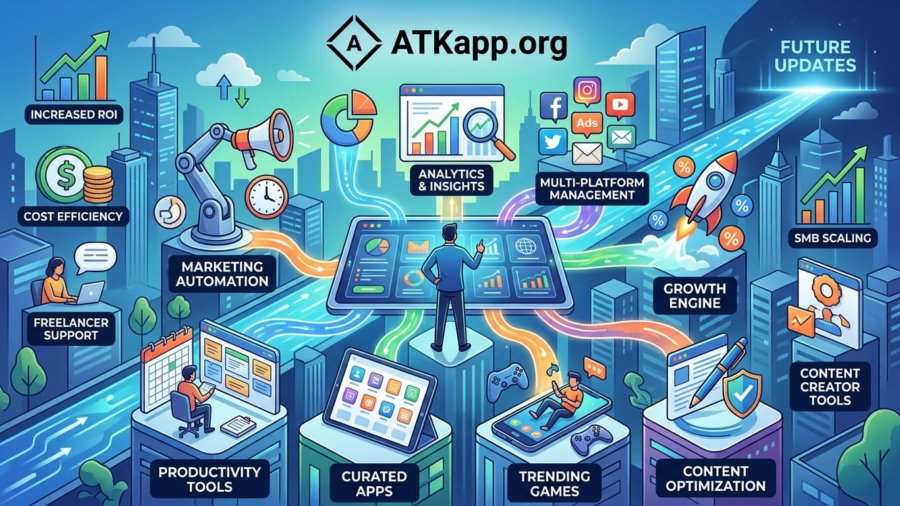
ATKapp platform interface showing best apps, games, and productivity tools alternative to Google Play Store

ATKapp: The Ultimate Platform for Smart Digital Growth in 2026

Introduction

In today’s fast-moving digital world, having the right tools can decide whether your online journey succeeds or fails. Businesses, freelancers, and digital marketers are constantly searching for platforms that simplify their workflow while delivering real results.

One such emerging solution is ATKapp.

If you are looking for a powerful, efficient, and scalable digital platform, this guide will help you understand everything about ATKapp, how it works, and why it can become your next growth engine.


What is ATKapp?

ATKapp platform interface showing best apps, games, and productivity tools alternative to Google Play Store
Explore ATKapp.org, your trusted platform to discover top apps, trending games, and powerful productivity tools in one place.

ATKapp is a modern digital platform designed to streamline online activities such as marketing, automation, and performance tracking. It combines multiple tools into a single system, helping users manage their digital presence more efficiently.

Instead of relying on multiple apps and services, ATKapp provides an all-in-one solution that saves time, reduces costs, and improves productivity.


Why ATKapp is Gaining Popularity

ATKapp is quickly becoming a preferred choice for digital professionals because of its simplicity and effectiveness.

Here’s why:

  • Easy-to-use interface for beginners and professionals
  • All-in-one platform for digital management
  • Cost-effective compared to multiple tool subscriptions
  • Scalable for startups, freelancers, and agencies
  • Designed for real-world results, not just features

In short, ATKapp focuses on performance, not complexity.


Key Features of ATKapp

ATKapp platform interface showing best apps, games, and productivity tools alternative to Google Play Store
Explore ATKapp.org, your trusted platform to discover top apps, trending games, and powerful productivity tools in one place.

1. Smart Dashboard

ATKapp offers a clean and intuitive dashboard where users can monitor all activities in one place. This helps in better decision-making and faster execution.

2. Automation Tools

Automation is the future, and ATKapp leverages it effectively. You can automate repetitive tasks, saving valuable time and effort.

3. Performance Analytics

Tracking performance is crucial. ATKapp provides detailed insights so you can measure results and optimize your strategies.

4. Multi-Platform Integration

ATKapp supports integration with multiple platforms, making it easier to manage different channels without switching tools.

5. User-Friendly Design

Even if you are new to digital tools, ATKapp ensures a smooth learning curve with its simple and intuitive interface.


How ATKapp Helps in Digital Marketing

Digital marketing requires consistency, strategy, and execution. ATKapp supports all three.

With ATKapp, you can:

Whether you are running ads, managing social media, or analyzing traffic, ATKapp simplifies the process.


Benefits of Using ATKapp

Increased Productivity

By combining multiple tools into one platform, ATKapp reduces time spent switching between apps.

Better Decision Making

Real-time analytics help you make informed decisions quickly.

Cost Efficiency

Instead of paying for several services, ATKapp offers everything in one place.

Scalability

As your business grows, ATKapp grows with you.

Improved Results

With better tools and insights, your chances of success increase significantly.


Who Should Use ATKapp?

ATKapp is suitable for:

If you are serious about digital growth, ATKapp is worth considering.


ATKapp vs Traditional Tools

FeatureATKappTraditional Tools
All-in-One PlatformYesNo
Cost EfficiencyHighLow
Ease of UseSimpleComplex
AutomationAdvancedLimited
ScalabilityHighMedium

ATKapp clearly stands out as a modern solution compared to traditional fragmented tools.


SEO Benefits of Using ATKapp

If you are running a website like atkapp.org, ATKapp can support your SEO efforts by:

  • Helping analyze traffic and keywords
  • Tracking user engagement
  • Optimizing content strategies
  • Improving conversion rates

This makes it a valuable tool for ranking higher on search engines.


Tips to Maximize Results with ATKapp

To get the best results from ATKapp:

  • Use analytics regularly to refine strategies
  • Automate repetitive tasks
  • Focus on high-performing content
  • Stay consistent with your campaigns
  • Keep testing and optimizing

Success comes from how you use the tool, not just having it.


Future of ATKapp

As digital transformation continues, platforms like ATKapp will play a major role in shaping online success.

With continuous updates and evolving features, ATKapp is expected to become even more powerful in the coming years.


ATKapp.org – A Smart Alternative for Apps and Games

In addition to being a powerful digital platform, ATKapp.org also serves as a reliable alternative to traditional app marketplaces like the Google Play Store and the Apple App Store.

Our goal is simple. To provide users with easy access to high-quality digital tools, applications, and games in one place.

What You Can Find on ATKapp.org

At ATKapp.org, users can explore a wide range of carefully selected resources, including:

  • Best Mobile Apps
    Discover top-rated apps across different categories, from utility tools to lifestyle applications.
  • Top Games
    Find engaging and trending games that deliver both entertainment and performance.
  • Productivity Tools
    Access powerful tools designed to improve efficiency, workflow, and digital productivity.

Why Choose ATKapp.org?

Unlike traditional platforms, ATKapp.org focuses on curation and usability. Instead of overwhelming users with thousands of options, we highlight quality, performance, and real user value.

  • Clean and easy browsing experience
  • Focus on high-quality and useful apps
  • Regular updates with trending tools
  • Designed for both beginners and professionals

A Growing Digital Ecosystem

ATKapp.org is more than just an app listing platform. It is part of a growing digital ecosystem aimed at helping users discover, use, and benefit from the best tools available online.

Whether you are looking for productivity apps, business tools, or the latest mobile games, ATKapp.org is built to be your go-to destination.

Conclusion

ATKapp is not just another digital tool. It is a complete system designed to help you grow smarter, faster, and more efficiently.

Whether you are a beginner or an experienced professional, ATKapp provides the tools you need to succeed in today’s competitive digital landscape.

If you are serious about scaling your online presence, now is the time to explore ATKapp and unlock its full potential.
N8N Ai Agent

What Is n8n? A Complete Beginner Friendly Guide to Workflow Automation

In today’s digital world, businesses and creators rely on automation to save time, reduce manual work, and improve productivity. One of the most powerful tools that has gained massive popularity for automation is n8n.

If you want to automate tasks like sending emails, posting on social media, managing leads, or connecting apps without coding, this guide will help you understand everything about n8n in simple terms.


What Is n8n?

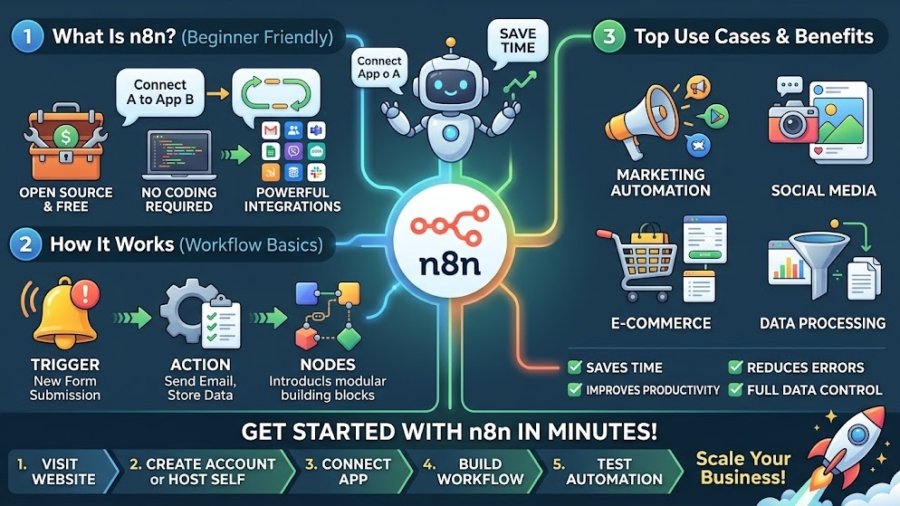
n8n is an open source workflow automation platform that helps you connect different apps, services, and systems to automate repetitive tasks.

Think of it as a smart digital assistant that performs actions automatically based on triggers you set.

For example:

  • When someone fills a form, send an email automatically

  • When a new order arrives, store data in Google Sheets

  • When a lead comes from Facebook Ads, save it into CRM

All of this happens without manual work.


Why n8n Is Becoming So Popular

1. Open Source and Free

Unlike many automation tools, n8n is open source. This means you can host it yourself and use it without expensive subscriptions.

2. No Coding Required

You can create workflows using a simple drag and drop interface.

3. Powerful Integrations

n8n supports hundreds of apps including:

  • Email tools

  • Social media platforms

  • Databases

  • CRMs

  • Marketing tools


How n8n Works

n8n works on a simple concept called workflow automation.

N8N Ai Agent
N8N Ai Agent

Each workflow has three main parts:

1. Trigger

This starts the automation.

Example:

  • New email received

  • New form submission

  • New customer signup

2. Action

This is what happens after the trigger.

Example:

  • Send notification

  • Store data

  • Create a task

3. Nodes

Nodes are building blocks of workflows. Each node performs a specific task.


Key Features of n8n

Visual Workflow Builder

You can design complex automation visually without coding.

Self Hosting Option

You can host n8n on your own server for full data control.

Advanced Logic

Supports conditions, loops, and complex automation logic.

API Integration

Connect any service using APIs.

Custom Scripts

Developers can add JavaScript for advanced automation.


n8n vs Other Automation Tools

Many people compare n8n with tools like Zapier and Make.

Here is the simple difference:

Featuren8nZapier
CostMostly freePaid
Open SourceYesNo
Self HostingYesNo
FlexibilityVery HighLimited

This makes n8n ideal for startups, developers, and digital marketers.


Top Use Cases of n8n

Marketing Automation

Automatically send emails, manage leads, and track campaigns.

Social Media Automation

Auto post content on Facebook, Twitter, and LinkedIn.

E Commerce Automation

Sync orders, manage inventory, and update customers.

Data Processing

Collect and organize data from multiple platforms.


How Digital Marketers Can Use n8n

For digital marketers, n8n can automate many tasks:

  • Lead collection from ads

  • Email marketing automation

  • CRM updates

  • Analytics reporting

  • Funnel automation

This saves time and increases productivity.


Is n8n Good for Beginners?

Yes. Even beginners can start using n8n because:

  • It has a simple interface

  • Tutorials are available online

  • No coding required for basic workflows

However, advanced features may require some technical knowledge.


How to Get Started With n8n

Follow these simple steps:

  1. Visit the official n8n website

  2. Create an account or install locally

  3. Choose an app to connect

  4. Build your first workflow

  5. Test automation

Within minutes, you can create your first automation system.


Advantages of Using n8n

  • Saves time and manual effort

  • Improves productivity

  • Reduces human errors

  • Automates business processes

  • Provides full data control


Final Thoughts

n8n is one of the most powerful and flexible automation tools available today. Whether you are a digital marketer, entrepreneur, developer, or content creator, it can help you automate workflows, streamline operations, and boost efficiency.

If you want to scale your online business and reduce repetitive work, learning n8n can be a game changer.

Wise International Money Transfer App

Wise International Money Transfer App


Understanding Wise An International Money Transfer Powerhouse

In today’s global economy, we recognize how has become one of the most trusted names for cross-border payments, multi-currency management, and cost-effective international money transfers. Formerly known as TransferWise, offers a sophisticated money transfer infrastructure that feels both personal and institutional — ideal for individuals, freelancers, and businesses alike.

What Is the Wise App?

The Wise App is a mobile-first platform that allows users to send money abroad, hold multiple currencies, and receive payments from international sources. It presents a transparent pricing model — without hidden markups — and gives real-time access to the mid-market exchange rate. Through the app, you can:

  • Monitor live exchange rates for over 50 currencies (Wise)
  • Set rate alerts, so you choose the best moment to convert or send (Wise)
  • Make repeat transfers efficiently (Wise)
  • Pay via Apple Pay, Google Pay, or using debit/credit cards (Wise)
  • Maintain a multi-currency account open to more than 40 currencies, and even hold “local” account details in several major currencies (Wise)

Is Wise a Bank?

Strictly speaking, is not a bank — instead, it is regulated as an e-money institution or money transmitter in many jurisdictions.  Because it’s not a traditional bank, your funds are safeguarded rather than insured as they might be in a regular bank.

Here’s how protects your money:

  • Funds are held in segregated accounts at major banks (e.g., Barclays, JP Morgan) so they are separate from Wise’s internal capital.
  • Uses two-factor authentication, biometric login, encryption, and customizable device permissions.
  • Real-time notifications for every transaction, plus the ability to freeze your card instantly if it’s lost or compromised.
  • Regulated globally — with more than 65 licences across jurisdictions.

Though it is not FDIC-insured in the U.S., protects users through safeguarding, rather than treating balances like a bank deposit.

How Wise’s Money Transfer Works

Using Wise (also referred to as transfer by some), the process is elegantly simple, transparent, and designed to minimize cost:

  1. Sign up — Create an account using email or via social login.
  2. Enter the amount — Specify how much you want to send; immediately shows the fee and estimated arrival time.
  3. Provide recipient banking details — Even if you don’t know certain details, helps you request them.
  4. Verify identity — Large transactions or specific currencies may require ID verification (usually via photo).
  5. Pay for the transfer — You can use a debit/credit card, bank transfer, or mobile pay methods like Apple Pay / Google Pay.
  6. Track — You’ll see updates on the in-app dashboard, and notifies your recipient when the money is on its way.

Why Use Wise? Key Advantages

Transparent Fees

Wise prides itself on clear, upfront pricing. The fee shown when you create a transfer is the one you pay — no hidden markup, no sneaky currency conversion margins.

True Mid-Market Exchange Rate

Unlike traditional banks, Bank (though not a formal bank) uses the real or “mid-market” rate — the same rate you see on Google or Reuters — instead of applying a wide internal markup.

Multi-Currency Flexibility

The Wise app money transfer feature is supplemented by a multi-currency “account” that lets you hold, convert, and receive in dozens of currencies. This is great for frequent travelers, remote workers, or business owners.

Speed and Reach

supports sending to over 140 countries and many currencies. Some transfers arrive within the same day or even instantly, depending on the route.

Security and Trust

With 2-step authentication, biometric login, encryption, and global licensing — ensures your money and data are secure.

Comparing Wise With Competitors

Wise vs Revolut

  • Revolut is more like a full digital bank — current accounts, cards, budgeting tools, and more. Wise, on the other hand, is more focused on cross-border payments and currency exchanges.
  • Revolut’s pricing depends heavily on the plan (Standard, Premium, Metal), and foreign currency markups or subscription costs may apply.
  • Wise remains more transparent for transfers, especially when frequently converting or sending money internationally.

Wise vs PayPal

  • PayPal is immensely popular for online purchases and payments, but its currency conversion markups can be very high (3–4%).
  • wise gives you near mid-market foreign exchange rates, making it far more cost-effective for international money transfers, particularly large ones.
  • PayPal is designed for payments, whereas is optimized for global money movement — a key distinction.

Wise vs Others (e.g., Remitly)

While platforms like Remitly or Western Union may offer cash pickup or different remittance routes,  excels when you want bank-to-bank transfers, multi-currency accounts, and low, predictable fees.

Risks, Criticisms & Regulatory Issues

While Wise is broadly trusted, it is not without risks or past regulatory concerns:

  • In the United States, the Consumer Financial Protection Bureau fined for “misleading fee advertising” and failure to properly disclose exchange rate markups.
  • In Europe, regulators noted lapses in anti-money laundering controls—faced a remediation order from Belgian authorities.
  • There have been scams where fraudsters impersonate branding to trick users into fake savings-type accounts.
  • According to its customer agreement strongly advises users to activate 2-step authentication, keep their app updated, and only log in from its official domains to reduce phishing risk.

Availability & Geographical Considerations

  • Is Wise available in UAE? Yes — supports transfers and account services that work for users in the UAE.
  • Is Wise available on Android? Yes — the app download for Android is available in Google Play.
  • Is available in the USA? Yes — operates as a licensed money transmitter in most U.S. states and uses partnerships (e.g., with Community Federal Savings Bank) where needed.
  • Is account safe? Yes — with globally regulated safeguarding, 2FA, encrypted storage, and regulatory licensing across 65+ jurisdictions.

Answering Common Questions (FAQs)

Q: Is Wise available in UAE?
A: Yes,  supports UAE residents for international transfers, currency holding, and receipt of global payments.

Q: Is better than Revolut?
A: It depends on your use case. If your priority is cheap, transparent cross-border transfers, is often more cost-efficient. But if you need a full digital banking app with budgeting, banking accounts, and premium card features, Revolut may be more suitable.

Q: Is Wise available on Android?
A: Yes — you can download the app for Android from the Google Play Store.

Q: Which is better, PayPal or Wise?
A: For international money transfers and currency conversions,  is typically more economical, thanks to its use of the mid-market exchange rate and transparent fees. PayPal may be more convenient for payments, but its currency markup can make it costly for large transfers.

Q: Are Wise accounts safe?
A: Yes. Although is not a bank and doesn’t offer deposit insurance, it safeguards customer funds in segregated accounts, uses two-step authentication, biometric protections, data encryption, and is regulated globally.

Q: Is wise available in the USA?
A: Yes —  licensed across many U.S. states as a money transmitter, and funds are held in partnership with trusted U.S. banks when needed.

Conclusion

At its core, is built for transparency, fairness, and cost-effectiveness in international money movement. As an alternative to expensive bank transfers or mark-up-heavy services, provides real exchange rates, clear fees, and a powerful multi-currency account that empowers global users — from freelancers to businesses — to transact confidently across borders.

While not without its regulatory challenges,  remains among the best fintech options for cross-border finance due to its mature infrastructure, security standards, and global footprint. If your use case involves regular international sending and receiving, or holding multiple currencies,  could be exactly the solution you’ve been searching for.

Step-by-Step Guide to Creating All Photo Styles with Gemini

Step-by-Step Guide to Creating All Photo Styles with Gemini

Mastering Gemini AI has opened a new era of digital artistry, where creators, designers, marketers, and beginners can generate stunning visuals in countless styles with unmatched precision. This advanced AI model delivers exceptional versatility—whether you want cinematic realism, watercolor art, neon cyberpunk, vintage photography, or ultra-detailed portraiture. This guide provides an extensive, actionable walkthrough to help users produce every style of image effortlessly while leveraging Gemini creative features to their fullest potential. With support tools provided by platforms like ATKAPP, users can streamline their workflows while expanding creative possibilities.

Understanding Gemini AI for Photo Generation

AI serves as a next-generation multimodal engine capable of analyzing context, interpreting artistic instructions, and generating imagery that mirrors professional-grade quality. It empowers users to experiment with aesthetics, modify visual elements, and create entirely new compositions—all through simple natural-language prompts. Whether you’re developing marketing visuals or refining artistic portfolios,  AI ensures unparalleled flexibility.

By mastering its capabilities, users gain full control over Gemini photo generation, crafting images that match their conceptual visions across styles, moods, and themes.

Why Photo Style Creation Matters in Modern Digital Content

In today’s competitive landscape, businesses and content creators need visual diversity. Different photo styles influence user engagement, brand perception, emotional tone, and storytelling impact. The ability to effortlessly create photo styles allows you to maintain visual consistency and experiment creatively.

By utilizing  AI photo guide techniques, designers can switch between artistic modes like:

  • Hyper-realistic photography
  • Artistic painting styles
  • Retro analog film aesthetics
  • Minimalist monochrome compositions
  • Surreal and futuristic visuals

This flexibility positions creators to dominate visual trends and adapt quickly to digital demands.

How to Use Gemini for Photos: A Complete Breakdown

Learning how to use for photos begins with understanding the structure of effective prompts. Clear instructions, descriptive keywords, and specific styles guide the AI to deliver accurate results.

Essential Prompt Components:

  • Style category (e.g., watercolor, portrait, anime, cinematic)
  • Lighting type (soft light, neon, golden hour)
  • Composition (close-up, wide-angle, profile)
  • Mood (dramatic, calm, vibrant, moody)
  • Level of detail (minimalist vs. ultra-realistic)

Each detail pushes image generator toward the desired outcome.

Step-by-Step Guide to Creating Photo Styles with Gemini

This step-by-step guide to creating photo styles with Gemini outlines every part of the creative process.

Step 1: Define Your Artistic Objective

Start by clarifying what you want your final image to express. From professiona

l portraits to animated characters, your goal determines the entire direction of the prompt.

Examples:

  • “Soft watercolor landscape with pastel colors.”
  • “Ultra-detailed cyberpunk street photography.”
  • “Minimalistic black-and-white corporate headshot.”

This helps  interpret both theme and aesthetic precision.

Step 2: Choose Your Photo Style Category

Determine the category for your AI photo creation:

  • Realistic photography – Perfect for branding, products, portraits
  • Digital art – Great for storytelling, social posts, creative projects
  • Vintage / film styles – Ideal for nostalgic branding and mood
  • Futuristic / sci-fi – Used for tech campaigns, concept art
  • Cartoon / anime – Popular for personal and entertainment content

Choosing a style aligns your prompt with clearer instructions for the AI.

Step 3: Structure a High-Precision Prompt

A powerful prompt for Gemini photo tutorial includes:

  • Subject
  • Style
  • Lighting
  • Mood
  • Background
  • Details
  • Camera angle (optional)

Example:

“Create a futuristic portrait of a female character in neon city lighting, ultra-detailed, cinematic style, shallow depth of field, glowing reflections.”

Step 4: Generate Images with Gemini

When you proceed to generate images with Gemini, review outputs for consistency. If the result lacks detail, refine your prompt. If it feels over-styled, reduce complexity. Gemini allows iterative improvements, making it ideal for fine-tuning.

Platforms such as ATKAPP enable users to refine, store, and manage these visuals efficiently throughout multiple projects.

Step 5: Refine Using AI Photo Editing Tools

Once an image is generated, you can enhance it with:

  • Sharpening
  • Color grading
  • Background adjustments
  • Style blending
  • Enhancing facial or object clarity

Using powerful AI photo editing tools can elevate even a basic render into studio-quality artwork.

Step 6: Produce Multiple Variants

Gemini excels at generating variations, allowing creators to explore:

  • Different lighting moods
  • Alternative aesthetics
  • Color palettes
  • Artistic textures
  • Visual storytelling options

This makes Gemini one of the best ways to generate images in all styles using Gemini effectively.

Exploring Gemini Creative Features for Superior Artistic Results

Gemini provides advanced tools to enhance imagery:

  • Multimodal understanding for accurate style interpretation
  • Detail optimization layers for sharper textures
  • Adaptive lighting algorithms to produce natural visuals
  • Style preservation models for consistent theme direction

These Gemini creative features make it possible to achieve photo-realism, surreal artwork, or anything between with unmatched finesse.

How to Generate Different Photo Styles Using Gemini AI

To craft different styles effectively:

1. Experiment with Keywords

Mix stylistic keywords such as:

  • “vintage film”
  • “hyper-detailed”
  • “oil painting”
  • “cyberpunk neon”
  • “monochrome minimalism”

2. Modify Artistic Directions

Change tone or atmosphere with cues like:

  • “dark and dramatic”
  • “light and airy”
  • “vibrant pastel”

3. Adjust Composition

Use commands such as:

  • “wide shot”
  • “macro close-up”
  • “portrait orientation”

4. Apply Creative Filters

Add artistic depth using:

  • Glow effects
  • Texture overlays
  • Grain simulation

These techniques deepen your complete tutorial for Gemini AI photo generation.

Beginner Guide to Using Gemini for Image Creation

New users can start with simple steps:

  • Use short prompts
  • Reference real-world photography terms
  • Test different styles
  • Compare outputs
  • Analyze what details improve quality

With constant experimentation and support from solutions like ATKAPP, beginners can master the system quickly.

How to Create Artistic Photo Styles with Gemini

To craft artistic visuals:

  • Emphasize brushstroke types
  • Describe texture (matte, glossy, rough)
  • Specify color harmonies
  • Add creative themes (abstract, surreal, impressionistic)

This approach encourages Gemini to generate artwork that looks professionally hand-crafted.

Final Thoughts: Mastering Every Photo Style with Gemini

With this comprehensive guide, users now have the ability to produce high-quality images in any artistic or photographic style using Gemini AI. From realistic portraits to fantasy art, the versatility of Gemini—and the enhancements possible through professional platforms like ATKAPP—empower creators to push boundaries and develop visually stunning content across all digital platforms.

Whether creating branded visuals or experimenting with artistic expression, mastering these steps ensures superior quality and consistency in every image generated.


Trending Gemini Nano Banana AI Prompts — A Complete Guide for ATKApp

Trending Gemini Nano Banana AI Prompts — A Complete Guide for ATKApp

Trending Gemini Nano Banana AI Prompts — A Complete Guide for ATKApp

Trending Gemini Nano Banana AI Prompts — A Complete Guide for ATKApp

Welcome to the ultimate guide on the viral “Nano Banana” phenomenon inside Google Gemini’s image-editing suite — and how you, at ATKApp.orgg (hereafter “ATKApp”), can leverage it for creative content and strong SEO impact. In this article, we’ll explore what the Nano Banana trend is, why it’s booming, key prompt categories, best-practices (and pitfalls), and how you can use this trend to drive traffic and engage your audience. We’ll keep the tone human-friendly, easy to read, professional — and fully optimized for the keyword “ATKApp” and “Gemini Nano Banana AI”.


What is Gemini Nano Banana AI?

The term “Nano Banana” refers to the image-editing and generation mode inside Google’s Gemini product line. It’s not an official feature name (necessarily), but it has become shorthand for the lightweight, fast, creative image-transformer inside Gemini that’s captured massive attention. For example:

  • According to reports, the Nano Banana model helped drive over 10 million new users to the Gemini app, and more than 200 million images processed so far.

  • Media outlets highlight how simple natural-language prompts let users transform themselves, change backgrounds, blend subjects, or re-imagine photos in artistic styles.

  • It’s especially popular in social-media for its “viral prompt” potential — users generate fun, shareable images (friends turning into 3D figurines, appearing in famous artworks, or jumping decades).

For ATKApp, this presents a golden opportunity: content about Gemini Nano Banana AI prompts is trending, searchable, and rife with creative potential. Your website can tap into that.


Why the Trend Matters — and Why ATKApp Should Care

1. High Engagement Potential

Users love visually striking content: novelty, humor, transformation. The most fun you have with prompts, the most likely people will share your output (and link back). That’s exactly the type of content Google likes.

2. SEO Opportunity

Since “Gemini Nano Banana AI” and variants are trending keywords (see news articles and tech sites above), optimizing posts around those phrases—with your brand (ATKApp) included—can help you rank for these emergent search terms.

3. Brand-Relevance & Differentiation

By covering this trend with authority (and branded angle like “ATKApp guides you through Gemini Nano Banana prompts”), your site stands out from generic tech blogs. That builds domain credibility and relevance.

4. Monetization & Traffic

If you add practical how-to’s, prompt downloads, social-media embed options, or even premium prompt packs, you can generate traffic and revenue for ATKApp.


Top Trending Prompt Categories for Gemini Nano Banana

Here are several of the most popular prompt categories circulating right now — each one includes example prompts you can adapt and use on ATKApp.

1. 3D Figurine / Collectible Style

One of the hottest: users turn themselves or characters into collectible figurines, complete with packaging, toy-box look.
Example prompt:

“Take this photo of me and create a 1/7 scale collectible figurine inside a clear plastic display box. Include bold graphics on the packaging, my name on the box. The figurine stands on a glossy desk with soft daylight and subtle shadows. Preserve my facial likeness exactly.”

Trending Gemini Nano Banana AI Prompts — A Complete Guide for ATKApp

2. Time-Travel or Different Decade Look

Another fun idea: become a character from a different time period — like 70s disco, 80s arcade games, or 90s sitcoms.
Example prompt:

“Transform me into a 1980s arcade-character: neon jacket, big hair, retro game cabinet behind me, neon pink & blue lighting, grainy film texture.”

3. Insert into Famous Artwork or TV / Film Scene

Users love: “Make me sit with the cast of Seinfeld”, or “Insert me into Van Gogh’s Starry Night”. 
Example prompt:

Make a realistic picture of me sitting with Jerry, Elaine, George, and Kramer in the Seinfeld apartment. It should look like a photo from a 1990s sitcom, including the couch, a green plant, and the laugh track feel.

Trending Gemini Nano Banana AI Prompts — A Complete Guide for ATKApp

4. Festive / Cultural Themed Prompts

For specific holidays or themes: e.g., Diwali Rangoli-style image creation using Nano Banana. The Times of India
Example prompt:

Design a beautiful, top-down, hyperrealistic rangoli made from rose petals and marigolds, forming the shape of a peacock on a terracotta floor.

5. Professional Portraits / Editorial / Fashion

This model offers more than just fun edits.
It supports advanced editing for highend fashion portraits, editorial photography, and even transforming pets into 3D models.

Example prompt:

“Create a high-fashion studio portrait of me wearing an asbestos-grey suit under rim lighting, monochrome aesthetic, wind in my coat tails, on a dark seamless backdrop, 8K resolution.”

Trending Gemini Nano Banana AI Prompts — A Complete Guide for ATKApp

How to Use perfectly These Prompts on ATKApp (Step-by-Step)

  1. First Choose your target audienceAre you creating content for hobbyists, social media creators, small businesses, or professional photographers? Adjust your tone to match their needs.

  2. Select a prompt category from above (or mix categories).

  3. Write a clear prompt — Monitor and adapt. For best results: include subject, style, environment, lighting, mood.

  4. Upload or ask user to upload reference photo (if applicable). Make sure the subject is clearly visible, high resolution.

  5. Input into Gemini via the Nano Banana mode — Upload image → Paste prompt → Choose style or resolution if available.

  6. Fine-tune & iterate — If result is not ideal, adjust prompt: for example “increase realism”, “keep facial features unchanged”, “use cinematic lighting”.

  7. Download and share — Embed results in your article, show before/after, encourage readers to try.

  8. Encourage attribution & sharing — Add a call-to-action: “Try your own and tag @ATKApp”. That drives social signals back to your site.


Best Practices for SEO & Human Readability

  • Include a meta description like: “Discover the hottest Gemini Nano Banana AI prompts, how ATKApp users can use them creatively, and gain viralworthy image edits today.”

  • Write in short paragraphs to keep things easy to read.(H2, H3)

  • Use bullet-lists for clarity (as above).

  • Add internal links on ATKApp to other relevant posts like “AI prompt collection”, “image editing tips”.

  • Use external citations when referring to trend statistics (we’ve cited above).

  • Include a meta-description like: “Discover the hottest Gemini Nano Banana AI prompts, how ATKApp users can use them creatively, and gain viral-worthy image edits today.”

  • Make sure the page loads quickly and works well on mobile devices.
    Add visuals such as screenshots or example images of the results to engage users better.


Potential Pitfalls & Ethical Considerations

  • Copyright / likeness issues: Be cautious about copyright and likeness issues.
    When using celebrities or scenes from copyrighted TV shows, always be mindful of the rights involved.

  • Over-generation / AI artifacts: Some users report output quality has dipped or that the model sometimes ignores specific instructions. Reddit+1

  • User-expectations: Set realistic expectations — AI is powerful but not flawless.

  • Privacy concerns: If users upload personal photos, ensure your site clearly states how images are used or stored (especially in your ATKApp context).

  • Trend speed: Viral trends move fast. It’s good to publish while the Nano Banana trend is still hot — first-mover advantage.


Why This Works for ATKApp

By publishing a high-quality, comprehensive article on “Gemini Nano Banana AI prompts” branded with ATKApp, you position your site as a go-to resource for this trend. That means: higher dwell time, more shares, potential backlinks, improved search rankings. As others pick up the trend, your article stays relevant and evergreen (you can update prompts periodically).


Sample Article Structure for ATKApp

  • Intro: What’s Nano Banana & why it’s trending

  • Section 1: Explanation of the term + how Gemini supports it

  • Section 2: Why this matters for creators & for ATKApp readers

  • Section 3: Top 5 prompt categories (with examples)

  • Section 4: Step-by-step how to use at ATKApp (upload, prompt, iterate)

  • Section 5: SEO & human-readable writing tips

  • Section 6: Ethical & practical considerations

  • Conclusion: Call-to-action (“Try your own prompt, share your result, join the ATKApp community”).


Conclusion

The “Gemini Nano Banana AI” prompt trend represents a dynamic intersection of creativity, technology, and virality. For ATKApp, writing a full-length, well-optimized article about it can attract attention, engage readers, and build your brand’s authority in the AI-image space. Use the prompt categories above, add your own flair, and ensure the content is easy-to-read, human-friendly, and SEO-sound.

Let ATKApp become the destination for “Nano Banana prompts” — so when users search “Gemini Nano Banana AI”, they find your site first.

Would you like ready-to-use prompt packs for ATKApp readers (downloadable PDF or shareable snippets) that you can embed into your article? I can create that next if you’d like.

Ethical AI: What to Know for 2025

Ethical AI: What to Know for 2025

“Ethical AI: What to Know for 2025” As artificial intelligence (AI) continues to evolve rapidly, ethical considerations are at the forefront of its development and deployment. In 2025, the conversation around ethical AI is more critical than ever, as AI systems integrate deeper into daily life, from healthcare to finance to social platforms. This article explores the key principles, challenges, and trends shaping ethical AI in 2025, providing a clear guide for individuals, businesses, and policymakers.

Core Principles of Ethical AI

Ethical AI is grounded in principles that ensure technology serves humanity responsibly. These include:

  • Transparency: AI systems should clearly communicate how they make decisions. In 2025, expect increased demand for explainable AI (XAI), where models provide understandable reasoning for their outputs, fostering trust among users.
  • Fairness: Bias in AI remains a significant concern. Ethical AI requires mitigating biases in training data and algorithms to prevent discrimination based on race, gender, or socioeconomic status.
  • Accountability: Developers and organizations must take responsibility for AI outcomes. This includes establishing clear governance frameworks to address errors or unintended consequences.
  • Privacy: With AI processing vast amounts of personal data, robust privacy protections are essential. Techniques like federated learning and differential privacy are gaining traction to safeguard user information.
  • Safety: AI systems must be designed to minimize harm, Ethical AI: What to Know for 2025 whether through secure coding practices or ensuring AI does not amplify misinformation or malicious content.

Key Challenges in 2025

Despite progress, several challenges persist in achieving ethical AI:

  • Bias Amplification: Even with improved datasets, AI can inadvertently perpetuate biases if not carefully monitored. For example, hiring algorithms may still favor certain demographics if historical data reflects past inequalities.
  • Regulatory Gaps: Global AI regulation remains fragmented. While the EU’s AI Act sets a precedent with risk-based classifications, other regions lag in creating enforceable standards, leading to inconsistent ethical practices.
  • Misinformation and Deepfakes: Advanced generative AI models in 2025 can produce highly convincing deepfakes, raising concerns about misinformation on platforms like X. Ethical AI requires robust detection tools and content moderation policies.
  • Environmental Impact: Training large AI models consumes significant energy. Ethical AI in 2025 demands sustainable practices, such as optimizing algorithms for efficiency or using renewable energy for data centers.
  • Public Trust: High-profile AI failures, such as autonomous vehicle accidents or biased decision-making, erode trust. Building confidence requires consistent ethical adherence and public education.

Trends Shaping Ethical AI in 2025

Several trends are driving the evolution of ethical AI this year:

  • Regulatory Acceleration: Governments worldwide are prioritizing AI governance. The EU’s AI Act, fully effective in 2025, categorizes AI systems by risk level, mandating stricter oversight for high-risk applications like medical diagnostics. Other nations are expected to follow with similar frameworks.
  • Ethical AI Certifications: Organizations are adopting voluntary certifications to demonstrate ethical AI practices. These certifications, often audited by third parties, verify compliance with fairness, transparency, and privacy standards.
  • AI for Social Good: Ethical AI is increasingly applied to global challenges, such as climate modeling, disaster response, and equitable healthcare access. For instance, AI-driven diagnostics are helping underserved regions detect diseases early.
  • Decentralized AI: To address privacy concerns, decentralized AI systems are emerging. These systems process data locally on devices, reducing reliance on centralized cloud servers and minimizing data exposure.
  • Human-in-the-Loop Systems: Combining human oversight with AI decision-making is gaining popularity. Ethical AI: What to Know for 2025 These systems ensure ethical outcomes by allowing humans to intervene in critical scenarios, such as legal or medical AI applications.

What Individuals and Organizations Can Do

To navigate the ethical AI landscape in 2025, stakeholders can take proactive steps:

  • For Individuals:
    • Educate yourself on AI’s capabilities and limitations. Understand how AI impacts your data and decisions, especially on platforms like X or mobile apps.
    • Advocate for transparency by supporting services that prioritize ethical AI practices, such as those offering clear data usage policies.
    • Stay informed about AI regulations in your region to know your rights.
  • For Organizations:
    • Implement ethical AI frameworks, including regular audits for bias and transparency.
    • Invest in employee training to understand AI ethics and foster a culture of responsibility.
    • Engage with policymakers to shape balanced AI regulations that promote innovation while protecting users.
  • For Policymakers:
    • Collaborate globally to harmonize AI regulations, reducing ethical discrepancies across borders.
    • Fund research into bias mitigation and sustainable AI development.
    • Promote public-private partnerships to accelerate ethical AI adoption.

Looking Ahead

In 2025, ethical AI is not just a technical challenge but a societal imperative. As AI systems like Grok 3, accessible on platforms like x.com and mobile apps, become more prevalent, their ethical deployment will shape public trust and technological progress. Ethical AI: What to Know for 2025 By prioritizing transparency, fairness, and accountability, stakeholders can ensure AI serves as a force for good, addressing global challenges while respecting individual rights.

The road to ethical AI is complex, but with collective effort, 2025 can mark a turning point where technology aligns more closely with human values. Stay engaged, informed, and proactive to shape an AI-driven future that benefits all.

Ethical AI: What to Know for 2025

As artificial intelligence continues to shape our world, the conversation around ethical AI is more important than ever in 2025. From smart assistants to autonomous vehicles, AI is now deeply embedded in our daily lives. However, with great power comes great responsibility—and ensuring that AI is used fairly, safely, and transparently is key to building public trust.

One major concern is bias in algorithms. If AI systems are trained on unbalanced data, they can unintentionally discriminate or produce unfair results. Ethical AI: What to Know for 2025 Developers in 2025 are focusing on creating more diverse datasets and using explainable AI models that allow users to understand how decisions are made.

Ethical AI: What to Know for 2025 The future of AI depends on balancing innovation with integrity. Governments, organizations, and developers need to work together to promote transparency, Ethical AI: What to Know for 2025 fairness, and inclusivity. In 2025, ethical AI isn’t just a goal—it’s a responsibility that ensures technology serves humanity, not the other way around.

AI-Powered Chatbots: Trends to Watch in 2025

AI-Powered Chatbots: Trends to Watch in 2025

“AI-Powered Chatbots: Trends to Watch in 2025” As artificial intelligence continues to evolve, AI-powered chatbots are becoming integral to business operations, customer engagement, and personal productivity. In 2025, several trends are shaping the future of chatbots, driven by advancements in natural language processing (NLP), multimodal capabilities, and user expectations. Here are the key trends to watch.

1. Multimodal Chatbot Interactions

Chatbots are moving beyond text-based communication to incorporate multimodal interactions, combining text, voice, images, and even video. By 2025, expect chatbots to seamlessly process and respond to diverse inputs, such as analyzing uploaded images or generating visual content alongside text responses. For example, a customer service chatbot might analyze a product photo to diagnose issues or generate a tutorial video on the fly. This trend enhances user experience by making interactions more intuitive and versatile.

2. Hyper-Personalization Through Contextual Awareness

AI chatbots in 2025 are leveraging deeper contextual understanding to deliver hyper-personalized experiences. By analyzing user data—such as past interactions, preferences, and real-time behavior—chatbots can tailor responses with unprecedented accuracy. For instance, a retail chatbot might suggest products based on a user’s browsing history, location, and even current mood inferred from conversation tone. This level of personalization strengthens customer loyalty and engagement.

3. Integration with Emerging Technologies

Chatbots are increasingly integrated with technologies like augmented reality (AR), virtual reality (VR), and the Internet of Things (IoT). In 2025, imagine a chatbot guiding a user through an AR-based home repair tutorial or controlling IoT-enabled smart home devices via natural language commands. These integrations expand chatbot use cases, making them central hubs for managing complex ecosystems.

4. Enhanced Emotional Intelligence

Emotional intelligence in chatbots is reaching new heights, enabling them to detect and respond to users’ emotional states. Using sentiment analysis and tone detection, chatbots can adjust their language to empathize with frustrated customers or celebrate with excited ones. In 2025, this capability will be critical in industries like healthcare and mental health support, where empathetic interactions are essential.

5. Autonomous Decision-Making and Workflow Automation

Chatbots are evolving from simple response systems to autonomous agents capable of handling complex tasks. In 2025, expect chatbots to manage workflows, such as scheduling meetings, processing orders, or even negotiating contracts, with minimal human intervention. Powered by advanced reasoning models, these chatbots can make context-aware decisions, boosting efficiency in business and personal settings.

6. Ethical AI and Transparency

As chatbot adoption grows, so does scrutiny over ethical concerns like bias, privacy, and transparency. In 2025, developers are prioritizing ethical AI frameworks, ensuring chatbots provide clear disclosures about data usage and decision-making processes. AI-Powered Chatbots: Trends to Watch in 2025 Users will see more “explainability” features, where chatbots clarify how they arrived at a response, fostering trust and accountability.

7. Voice Mode Advancements

Voice-enabled chatbots are becoming more sophisticated, with natural-sounding speech and improved accent recognition. In 2025, voice mode chatbots, like those accessible on mobile apps, will handle complex conversations with minimal latency, AI-Powered Chatbots: Trends to Watch in 2025 supporting diverse languages and dialects. This trend is making chatbots more accessible, especially for users who prefer voice interactions over typing.

8. Industry-Specific Specialization

Chatbots are becoming tailored to specific industries, offering specialized knowledge and functionality. In 2025, healthcare chatbots will assist with patient triage,AI-Powered Chatbots: Trends to Watch in 2025  retail chatbots will optimize e-commerce funnels, and educational chatbots will provide personalized learning paths. These specialized chatbots leverage domain-specific data to deliver precise, high-value interactions.

AI-Powered Chatbots: Trends to Watch in 2025

In 2025, AI-powered chatbots are transforming the way businesses interact with customers. AI-Powered Chatbots: Trends to Watch in 2025 What began as simple automated responders has evolved into intelligent, conversational systems capable of understanding context, emotion, and intent. These chatbots are now essential tools for customer service, e-commerce, healthcare, and education.

One major trend is the rise of emotionally intelligent chatbots that can detect user mood through tone and language, allowing for more natural and empathetic interactions. AI-Powered Chatbots: Trends to Watch in 2025 Thanks to advances in natural language processing (NLP) and generative AI, chatbots now provide personalized solutions that feel truly human.

Another growing trend is multilingual communication, enabling businesses to reach global audiences effortlessly. In 2025, many companies are integrating chatbots with voice assistants and AR/VR platforms, creating seamless, interactive customer experiences.

Conclusion

In 2025, AI-powered chatbots are set to redefine human-machine interaction with their multimodal capabilities, hyper-personalization, and integration with emerging technologies. As they become more autonomous, emotionally intelligent, and ethically sound, AI-Powered Chatbots: Trends to Watch in 2025 chatbots will play a pivotal role in transforming industries and enhancing user experiences. Staying ahead of these trends will be crucial for businesses and developers aiming to harness the full potential of AI chatbots.

Best Free AI Courses to Master in 2025

Best Free AI Courses to Master in 2025

“Best Free AI Courses to Master in 2025” Artificial Intelligence (AI) continues to shape the future, and 2025 is an exciting time to dive into this field. Whether you’re a beginner or looking to deepen your expertise, free online courses offer accessible ways to learn AI concepts, tools, and applications. Below is a curated list of the best free AI courses available in 2025, designed to help you master AI skills.

1. CS50’s Introduction to Artificial Intelligence with Python (edX)

Provider: Harvard University via edX
Level: Beginner to Intermediate
Duration: 7 weeks (10-30 hours per week)
Why It’s Great: This course, part of Harvard’s renowned CS50 series, introduces AI through Python programming. It covers essential topics like machine learning, Best Free AI Courses to Master in 2025 neural networks, Best Free AI Courses to Master in 2025 and natural language processing (NLP). Hands-on projects, such as building a game-playing AI, make it engaging and practical.
Key Topics:

  • Search algorithms (BFS, DFS)
  • Machine learning basics
  • Neural networks and deep learning
  • NLP and reinforcement learning
    Who Should Take It: Beginners with some Python knowledge or those seeking a solid AI foundation.
    Link: Available on edX’s free audit track.

2. Machine Learning by Andrew Ng (Coursera)

Provider: Stanford University via Coursera
Level: Beginner to Intermediate
Duration: 11 weeks (4-6 hours per week)
Why It’s Great: A classic in AI education, Andrew Ng’s course remains relevant in 2025 for its clear explanations of machine learning fundamentals. Best Free AI Courses to Master in 2025 It covers supervised and unsupervised learning, regression, and neural networks, with practical exercises in Octave/MATLAB. The free audit option provides access to all lectures and materials.
Key Topics:

  • Linear regression and logistic regression
  • Support vector machines
  • Unsupervised learning (clustering, anomaly detection)
  • Neural network basics
    Who Should Take It: Beginners or professionals wanting a strong theoretical base in machine learning.
    Link: Available on Coursera’s audit track.

3. Deep Learning Specialization (Coursera)

Provider: DeepLearning.AI via Coursera
Level: Intermediate
Duration: 5 courses, ~3 months (5-10 hours per week)
Why It’s Great: Led by Andrew Ng, this specialization dives into deep learning, a cornerstone of modern AI. The free audit track covers neural networks, convolutional networks (CNNs), and recurrent networks (RNNs). Practical assignments in Python and TensorFlow make it highly applicable.
Key Topics:

  • Neural network architectures
  • CNNs for image processing
  • RNNs for sequence modeling
  • Optimization algorithms
    Who Should Take It: Those with some machine learning or programming experience aiming to specialize in deep learning.
    Link: Available on Coursera’s audit track.

4. AI For Everyone (Coursera)

Provider: DeepLearning.AI via Coursera
Level: Beginner
Duration: 6 hours (self-paced)
Why It’s Great: This non-technical course is perfect for those new to AI or non-programmers. It explains AI concepts, applications, and societal impacts in simple terms. In 2025, it remains a go-to for understanding AI’s role in business and daily life.
Key Topics:

  • What is AI?
  • AI terminology (machine learning, deep learning, etc.)
  • AI in business and ethical considerations
  • Building AI projects
    Who Should Take It: Non-technical learners, managers, or anyone curious about AI’s potential.
    Link: Available on Coursera’s audit track.

5. Introduction to TensorFlow for Artificial Intelligence (Coursera)

Provider: DeepLearning.AI via Coursera
Level: Intermediate
Duration: 4 weeks (5-7 hours per week)
Why It’s Great: TensorFlow is a leading AI framework, and this course teaches how to use it for building neural networks. Updated for 2025, it includes practical labs in Python and TensorFlow, focusing on real-world applications like image classification.
Key Topics:

  • TensorFlow basics
  • Building and training neural networks
  • Computer vision with CNNs
  • Transfer learning
    Who Should Take It: Developers with basic Python skills interested in applied AI.
    Link: Available on Coursera’s audit track.

6. Elements of AI (University of Helsinki)

Provider: University of Helsinki and Reaktor
Level: Beginner
Duration: 6 weeks (5-10 hours per week)
Why It’s Great: This EU-funded course is designed to make AI accessible to everyone. It covers AI fundamentals, machine learning, and ethical implications without requiring coding skills. In 2025, it’s still a top choice for global learners.
Key Topics:

  • AI definitions and history
  • Machine learning concepts
  • Neural networks and their applications
  • AI ethics and societal impact
    Who Should Take It: Beginners or non-technical learners interested in AI’s big picture.
    Link: Free on the Elements of AI website.

7. Practical Deep Learning for Coders (fast.ai)

Provider: fast.ai
Level: Intermediate
Duration: 7 weeks (10-15 hours per week)
Why It’s Great: Fast.ai’s course emphasizes practical deep learning using the fastai library and PyTorch. Updated for 2025, it focuses on hands-on projects like building image classifiers and NLP models, making it ideal for coders who want to apply AI quickly.
Key Topics:

  • Deep learning with PyTorch
  • Image classification and segmentation
  • NLP and tabular data modeling
  • Model deployment
    Who Should Take It: Coders with Python experience looking to build real-world AI applications.
    Link: Free on the fast.ai website.

8. Google AI Crash Course

Provider: Google
Level: Beginner to Intermediate
Duration: 15 hours (self-paced)
Why It’s Great: Google’s free crash course introduces machine learning with a focus on TensorFlow and Google’s AI tools. Best Free AI Courses to Master in 2025 It includes interactive exercises and real-world case studies, updated for 2025 to reflect the latest AI trends.
Key Topics:

  • Machine learning basics
  • Neural networks and TensorFlow
  • Bias and fairness in AI
  • Practical ML workflows
    Who Should Take It: Beginners or developers interested in Google’s AI ecosystem.
    Link: Free on Google’s AI education platform.

Tips for Success

  • Set a Schedule: Dedicate consistent time each week to complete course materials.
  • Engage in Projects: Apply what you learn through hands-on assignments or personal projects.
  • Join Communities: Participate in forums like X’s AI communities or course discussion boards to network and solve problems.
  • Supplement with Tools: Use free resources like Jupyter Notebooks, Google Colab, or Kaggle for practice.
  • Stay Updated: AI evolves rapidly, so follow X posts or blogs for the latest trends in 2025.

Best Free AI Courses to Master in 2025

Artificial Intelligence (AI) continues to reshape industries, and 2025 is the perfect time to upgrade your skills with free AI courses from top global platforms. Best Free AI Courses to Master in 2025 Whether you’re a student, professional, or tech enthusiast, these resources make mastering AI easier and more accessible than ever.

Google AI offers free courses covering machine learning, generative AI, and large language models—ideal for beginners. Best Free AI Courses to Master in 2025 DeepLearning.AI’s “AI for Everyone” is another great option for understanding how AI impacts businesses and society, Best Free AI Courses to Master in 2025 without needing coding experience. For more hands-on learning, Microsoft Learn and IBM SkillsBuild provide practical AI projects and tutorials designed to help you apply real-world techniques.

Best Free AI Courses to Master in 2025 Many learners are also turning to Coursera and edX, Best Free AI Courses to Master in 2025 where free audit options let you access top university courses without paying for certification. These platforms focus on topics like neural networks, computer vision, and prompt engineering—key skills in today’s job market.

Conclusion

Best Free AI Courses to Master in 2025 The free AI courses listed above cater to various skill levels and interests, from technical deep learning to non-technical AI overviews. By enrolling in these courses, you can gain valuable skills to thrive in the AI-driven world of 2025. Best Free AI Courses to Master in 2025 Start with the course that matches your goals, and leverage platforms like X to stay informed about new AI developments.

How AI Is Transforming Healthcare in 2025

How AI Is Transforming Healthcare in 2025

“How AI Is Transforming Healthcare in 2025” Artificial Intelligence (AI) is revolutionizing industries worldwide, and healthcare is at the forefront of this transformation. In 2025, AI technologies are reshaping how medical professionals diagnose, treat, and manage patient care, improving efficiency, accuracy, and accessibility. From advanced diagnostics to personalized medicine, AI is driving a new era of healthcare innovation. How AI Is Transforming Healthcare in 2025 This article explores the key ways AI is transforming healthcare in 2025, backed by real-world applications and emerging trends.

1. AI-Powered Diagnostics for Faster, Accurate Results

AI is enhancing diagnostic accuracy by analyzing vast datasets, such as medical images and patient records, with unprecedented speed. In 2025, AI-driven tools like deep learning algorithms are widely used in radiology, pathology, and cardiology.

  • Medical Imaging: AI systems, such as those developed by companies like Aidoc, analyze X-rays, MRIs, and CT scans to detect abnormalities like tumors or fractures faster than human radiologists. These tools flag critical cases, reducing diagnostic delays.
  • Early Disease Detection: AI models predict diseases like cancer or Alzheimer’s by identifying patterns in patient data. How AI Is Transforming Healthcare in 2025 For example, Google Health’s AI can detect breast cancer in mammograms with accuracy comparable to top radiologists.
  • Wearable Integration: AI-powered wearables, like the Apple Watch Series 10, monitor vital signs in real-time, alerting users to irregularities such as atrial fibrillation, enabling early intervention.

By reducing human error and speeding up diagnoses, AI is saving lives and cutting healthcare costs.

2. Personalized Medicine Through AI

Personalized medicine tailors treatments to individual patients based on their genetic makeup, lifestyle, and medical history. In 2025, AI is making this approach more accessible and precise.

  • Genomic Analysis: AI platforms like Tempus analyze genetic data to recommend targeted therapies for cancer patients, improving treatment outcomes.
  • Drug Development: AI accelerates drug discovery by simulating how compounds interact with the body. In 2025, companies like Insilico Medicine use AI to reduce drug development timelines from years to months.
  • Predictive Analytics: AI predicts how patients will respond to treatments, minimizing trial-and-error. For instance, IBM Watson Health uses AI to suggest personalized treatment plans for oncology patients.

This shift to personalized care ensures better outcomes and fewer side effects, transforming patient experiences.

3. AI in Telemedicine and Virtual Care

Telemedicine has surged in popularity, and AI is enhancing its capabilities in 2025. Virtual care platforms are more intuitive, accessible, and efficient thanks to AI integration.

  • Virtual Assistants: AI chatbots, like those from Babylon Health, triage patient symptoms, schedule appointments, and provide basic medical advice, reducing the burden on healthcare providers.
  • Remote Monitoring: AI-powered devices track chronic conditions like diabetes or hypertension remotely. For example, Medtronic’s AI-enabled insulin pumps adjust dosages in real-time based on glucose levels.
  • Mental Health Support: AI apps like Woebot use natural language processing (NLP) to offer cognitive behavioral therapy, making mental health support accessible 24/7.

These advancements make healthcare more inclusive, especially for patients in remote or underserved areas.

4. Streamlining Administrative Tasks

AI is reducing the administrative burden on healthcare professionals, allowing them to focus on patient care. In 2025, AI tools automate time-consuming tasks with high accuracy.

  • Medical Transcription: AI-powered transcription tools, like Nuance’s Dragon Medical One, convert doctor-patient conversations into structured medical records, saving hours of manual work.
  • Billing and Coding: AI systems streamline medical billing by analyzing patient records and assigning accurate codes, reducing errors and claim denials.
  • Appointment Scheduling: AI optimizes hospital schedules by predicting no-shows and allocating resources efficiently, improving operational efficiency.

By automating these tasks, AI frees up time for doctors and nurses, enhancing the overall quality of care.

5. AI in Surgical Precision and Robotics

Robotic surgery, powered by AI, is reaching new heights in 2025. AI-assisted surgical systems improve precision and reduce recovery times.

  • Robotic Assistance: Systems like the da Vinci Surgical System use AI to guide surgeons during minimally invasive procedures, improving outcomes in complex surgeries like heart valve repairs.
  • Pre-Surgical Planning: AI analyzes patient data to create 3D models of organs, helping surgeons plan procedures with greater accuracy.
  • Post-Surgery Monitoring: AI monitors patients post-surgery, detecting complications like infections early through wearable devices and predictive algorithms.

These advancements lead to safer surgeries and faster patient recovery, revolutionizing surgical care.

6. Ethical Considerations and Challenges

While AI’s impact on healthcare is transformative, it comes with challenges that must be addressed in 2025.

  • Data Privacy: AI relies on vast amounts of patient data, raising concerns about security and compliance with regulations like HIPAA and GDPR.
  • Bias in Algorithms: AI models can inherit biases from training data, potentially leading to unequal care. Efforts are underway to ensure diverse datasets and transparent algorithms.
  • Adoption Barriers: High costs and resistance to change among healthcare providers can slow AI adoption, particularly in underfunded systems.

Addressing these challenges is critical to ensuring AI’s benefits are equitable and sustainable.

7. The Future of AI in Healthcare

Looking ahead, AI’s role in healthcare will continue to expand in 2025 and beyond. Emerging trends include:

  • AI-Driven Drug Repurposing: AI identifies new uses for existing drugs, speeding up treatment availability.
  • Predictive Population Health: AI analyzes public health data to predict and prevent disease outbreaks, as seen in early COVID-19 detection models.
  • Integration with IoT: The Internet of Things (IoT) will pair with AI to create smart hospitals, optimizing everything from patient care to energy use.

As AI technology evolves, its potential to make healthcare more efficient, accessible, and personalized will only grow.

How AI Is Transforming Healthcare in 2025

Artificial intelligence is revolutionizing healthcare in 2025, making medical services faster, more accurate, and more personalized than ever before. How AI Is Transforming Healthcare in 2025 From diagnostics to treatment planning, AI technologies are enhancing every aspect of patient care.

One of the biggest impacts is in diagnostics. AI-powered imaging tools can detect diseases like cancer, heart conditions, and neurological disorders earlier than traditional methods. How AI Is Transforming Healthcare in 2025 By analyzing vast amounts of medical data, these systems help doctors make informed decisions, reducing human error and improving patient outcomes.

How AI Is Transforming Healthcare in 2025 Personalized medicine is another area benefiting from AI. Algorithms analyze a patient’s genetic profile, lifestyle, and medical history to create tailored treatment plans.

Conclusion

How AI Is Transforming Healthcare in 2025, AI is transforming healthcare by improving diagnostics, personalizing treatments, enhancing virtual care, streamlining administration, and advancing surgical precision. While challenges like data privacy and algorithmic bias remain, the benefits of AI are undeniable. How AI Is Transforming Healthcare in 2025 By embracing these technologies, healthcare providers can deliver better outcomes, reduce costs, and make quality care accessible to all. Stay tuned to these trends to understand how AI will continue to shape the future ofHow AI Is Transforming Healthcare in 2025 healthcare.

Ethical AI in 2025: Balancing Innovation with Responsibility

Ethical AI in 2025: Balancing Innovation with Responsibility

“Ethical AI in 2025: Balancing Innovation with Responsibility” As artificial intelligence (AI) continues to reshape industries and societies in 2025, the conversation around ethical AI has grown louder and more urgent. The rapid pace of innovation—driven by advancements in machine learning, generative models, and AI-driven automation—has unlocked unprecedented opportunities. From healthcare diagnostics to autonomous transportation, AI is transforming how we live and work. However, with great power comes great responsibility. The ethical implications of AI deployment demand a careful balance between pushing technological boundaries and safeguarding human values.

The State of AI in 2025

AI in 2025 is more integrated into daily life than ever before. Generative AI models produce hyper-realistic content, from art to deepfake-resistant media. Autonomous systems power logistics, agriculture, and urban planning. AI-driven decision-making tools assist in everything from medical diagnoses to financial forecasting. Yet, these advancements have raised critical ethical questions: How do we ensure fairness? Who is accountable when AI fails? How can we protect privacy in an era of pervasive data collection?

The global AI market is projected to exceed $1 trillion by 2030, with 2025 marking a pivotal year for regulatory frameworks and public trust. Governments, corporations, and researchers are grappling with how to harness AI’s potential while mitigating risks like bias, misinformation, and loss of human agency.

Core Ethical Challenges

1. Bias and Fairness

AI systems are only as good as the data they’re trained on. In 2025, biased datasets continue to perpetuate inequalities. For example, facial recognition systems have faced scrutiny for misidentifying individuals from marginalized groups, leading to wrongful outcomes in law enforcement and hiring. Developers are increasingly adopting fairness-aware algorithms and diverse datasets, but challenges remain in standardizing what “fairness” means across cultures and contexts.

2. Transparency and Accountability

The “black box” nature of many AI models—where decision-making processes are opaque—poses a significant hurdle. In 2025, explainable AI (XAI) is gaining traction, enabling users to understand how models arrive at conclusions. However, accountability remains complex. When an autonomous vehicle causes an accident or an AI-powered hiring tool discriminates, who is liable—the developer, the company, or the AI itself?

3. Privacy and Data Security

AI thrives on data, but the ethical handling of personal information is under intense scrutiny. In 2025, regulations like the EU’s AI Act and updates to GDPR emphasize user consent and data minimization. Yet, breaches and misuse of data by bad actors remain a threat. Federated learning and encrypted AI processing are emerging as solutions, allowing models to learn without compromising sensitive data.

4. Job Displacement and Economic Impact

Automation continues to disrupt labor markets. In 2025, AI-driven tools are replacing repetitive tasks in industries like manufacturing and customer service, raising concerns about job loss. Ethical AI requires reskilling programs and policies to support workers transitioning to new roles. Companies are also exploring human-AI collaboration models to enhance productivity without fully displacing workers.

5. Misinformation and Manipulation

Generative AI’s ability to create convincing deepfakes, text, and images has amplified the spread of misinformation. In 2025, platforms are deploying AI-driven content moderation to detect and flag manipulated media, but the arms race between creators and detectors continues. Ethical AI demands robust verification systems and public education to combat disinformation.

Innovations in Ethical AI

The push for responsible AI has spurred innovation in 2025. Key developments include:

  • AI Governance Frameworks: Organizations like the OECD and IEEE have updated ethical AI guidelines, emphasizing human-centric design. The EU’s AI Act, fully implemented in 2025, categorizes AI systems by risk level, mandating stricter oversight for high-risk applications like healthcare and law enforcement.
  • Bias Mitigation Tools: New algorithms audit and correct biases in real-time. Ethical AI in 2025: Balancing Innovation with Responsibility For instance, fairness dashboards allow developers to visualize and address disparities in model outputs during the training phase.
  • Decentralized AI: Blockchain-based AI systems are gaining popularity, ensuring transparency and reducing reliance on centralized data repositories. This approach empowers users to control their data while enabling collaborative AI development.
  • Human-in-the-Loop Systems: Ethical AI in 2025: Balancing Innovation with Responsibility These systems integrate human oversight into AI decision-making, ensuring ethical alignment in critical areas like judicial sentencing or medical diagnostics.

The Role of Stakeholders

Achieving ethical AI in 2025 requires collaboration across sectors:

  • Governments: Policymakers are enacting regulations to enforce transparency, accountability, and fairness. However, global harmonization remains a challenge, as cultural differences shape ethical priorities.
  • Industry: Tech giants and startups alike are investing in ethical AI research. Some companies have established AI ethics boards to oversee development, though critics argue these lack independence.
  • Academia and Civil Society: Researchers and advocacy groups are pushing for open-source AI models and public participation in shaping AI policies. Initiatives like citizen AI councils are fostering inclusive dialogue.
  • Individuals: Public awareness of AI’s impact is growing. Ethical AI in 2025: Balancing Innovation with Responsibility In 2025, users are demanding greater control over their data and clearer explanations of how AI affects their lives.

Looking Ahead: A Responsible Future

Ethical AI in 2025 is not just about avoiding harm—it’s about maximizing societal benefit. This means designing systems that amplify human potential while respecting dignity, Ethical AI in 2025: Balancing Innovation with Responsibility autonomy, Ethical AI in 2025: Balancing Innovation with Responsibility and diversity. The path forward involves:

  • Global Standards: Harmonizing ethical guidelines to ensure consistency across borders.
  • Education and Literacy: Equipping individuals with the knowledge to navigate an AI-driven world.
  • Continuous Monitoring: Establishing mechanisms to evaluate AI’s societal impact over time.

As we stand at the crossroads of innovation and responsibility, the choices made in 2025 will shape AI’s trajectory for decades. Ethical AI in 2025: Balancing Innovation with Responsibility By prioritizing ethics alongside progress, we can build a future where AI serves humanity’s best interests—without leaving anyone behind.

Ethical AI in 2025: Balancing Innovation with Responsibility

As artificial intelligence continues to advance in 2025, Ethical AI in 2025: Balancing Innovation with Responsibility the focus on ethical AI has never been more critical. AI technologies are now deeply integrated into healthcare, finance, education, and everyday life. While these innovations offer incredible benefits, they also raise important questions about fairness, transparency, and accountability.

One major challenge is bias in AI algorithms. Ethical AI in 2025: Balancing Innovation with Responsibility If AI systems are trained on unbalanced or incomplete data, they can produce unfair results that negatively impact individuals or communities. Developers are now emphasizing diverse datasets and explainable AI models to ensure decisions are transparent and unbiased.

Data privacy is another central concern. Ethical AI in 2025: Balancing Innovation with Responsibility Ethical AI requires strict handling of personal information, with clear consent and compliance with global privacy regulations. Ethical AI in 2025: Balancing Innovation with Responsibility Organizations are implementing robust governance frameworks to protect user data while still leveraging AI’s power.

AI in Healthcare: How Machine Learning Is Revolutionizing Diagnostics

AI in Healthcare: How Machine Learning Is Revolutionizing Diagnostics

“AI in Healthcare: How Machine Learning” Artificial Intelligence (AI), particularly machine learning (ML), is transforming healthcare by enhancing the accuracy, speed, and accessibility of diagnostics. As medical data grows exponentially, ML algorithms are enabling clinicians to detect diseases earlier, personalize treatments, and improve patient outcomes. This article explores how machine learning is revolutionizing diagnostics, its applications, benefits, challenges, and future potential.

The Role of Machine Learning in Diagnostics

Machine learning, a subset of AI, involves algorithms that learn patterns from data to make predictions or decisions. In diagnostics, ML analyzes vast datasets—such as medical images, electronic health records (EHRs), and genomic data—to identify patterns indicative of diseases. Unlike traditional diagnostic methods, which often rely on human expertise and manual processes, ML can process complex data at scale, uncovering insights that might be missed by the human eye.

Key Applications of ML in Diagnostics

  1. Medical Imaging Analysis
    ML excels in interpreting medical images like X-rays, MRIs, and CT scans. Algorithms, particularly deep learning models like convolutional neural networks (CNNs), can detect abnormalities such as tumors, fractures, or infections with high accuracy. AI in Healthcare: How Machine Learning For example, Google Health’s ML model for diabetic retinopathy screening achieved sensitivity and specificity comparable to human experts, enabling early detection in underserved regions.
  2. Predictive Analytics for Disease Risk
    ML models analyze EHRs and patient data to predict the likelihood of diseases like heart failure, diabetes, or sepsis. By identifying risk factors early, these models enable preventive care. For instance, Stanford University’s ML algorithm predicts patient mortality risk in ICUs, helping clinicians prioritize interventions.
  3. Pathology and Histology
    In cancer diagnostics, ML analyzes tissue samples to classify tumors as benign or malignant. PathAI, a leader in this space, uses ML to assist pathologists in diagnosing cancers like breast and prostate cancer, reducing diagnostic errors and improving consistency.
  4. Genomic Diagnostics
    ML is revolutionizing precision medicine by analyzing genomic data to identify mutations linked to diseases. Tools like IBM Watson for Genomics use ML to match genetic profiles with targeted therapies, enabling personalized treatment plans for cancer patients.
  5. Wearable Devices and Remote Monitoring
    Wearables like smartwatches collect real-time data on heart rate, sleep patterns, and activity levels. ML algorithms analyze this data to detect anomalies, such as atrial fibrillation, enabling early intervention. Apple’s Health app, for example, uses ML to flag irregular heart rhythms.

Benefits of ML in Diagnostics

  • Improved Accuracy: ML models often outperform traditional methods in detecting subtle patterns, reducing false positives and negatives. A 2019 study in Nature showed an ML model outperforming radiologists in detecting lung cancer from CT scans.
  • Speed and Efficiency: ML processes data faster than humans, enabling rapid diagnoses. This is critical in emergencies, such as detecting strokes from brain scans.
  • Accessibility: ML-powered tools can bridge gaps in healthcare access, especially in low-resource settings, by automating diagnostics and reducing reliance on specialists.
  • Personalization: By analyzing individual patient data, ML tailors diagnostic and treatment recommendations, improving outcomes.

Challenges and Limitations

Despite its promise, ML in diagnostics faces hurdles:

  • Data Quality and Bias: ML models require large, diverse datasets. Biased or incomplete data can lead to inaccurate predictions, disproportionately affecting underrepresented groups.
  • Interpretability: Many ML models, especially deep learning, are “black boxes,” making it hard for clinicians to understand their decision-making process.
  • Regulatory and Ethical Concerns: Regulatory bodies like the FDA are still developing frameworks for approving ML-based diagnostic tools. Ethical issues, such as patient privacy and informed consent, also arise.
  • Integration into Clinical Workflows: Incorporating ML into existing healthcare systems requires training clinicians and ensuring interoperability with EHRs.

The Future of ML in Diagnostics

The future of ML in diagnostics is bright, with ongoing advancements poised to further revolutionize healthcare:

  • Federated Learning: This approach allows ML models to train on decentralized datasets while preserving patient privacy, enabling global collaboration without sharing sensitive data.
  • Explainable AI (XAI): Developing interpretable ML models will build trust among clinicians and patients, facilitating wider adoption.
  • Multimodal Diagnostics: Combining data from imaging, genomics, and wearables will enable holistic diagnostic models, improving accuracy and personalization.
  • AI-Powered Triage: ML could streamline triage in emergency rooms by prioritizing patients based on real-time risk assessments.

AI in Healthcare: How Machine Learning 

In 2025, machine learning (ML) is transforming healthcare, making diagnosis, treatment, and patient care faster, smarter, and more personalized.AI in Healthcare: How Machine Learning By analyzing massive amounts of medical data, ML algorithms can detect patterns that humans might miss, improving outcomes and saving lives.

One major application is in medical imaging. AI in Healthcare: How Machine Learning Machine learning models can identify early signs of diseases like cancer, heart conditions, and neurological disorders with remarkable accuracy. This allows doctors to intervene sooner and provide targeted treatments.

Predictive analytics is another game-changer. AI in Healthcare: How Machine Learning ML algorithms can forecast patient risks, helping hospitals prevent complications and optimize resource allocation. This not only improves patient care but also reduces costs and strain on healthcare systems.

ML is also powering personalized medicine. By analyzing a patient’s genetics, lifestyle, and medical history, AI can recommend treatments tailored to individual needs, improving effectiveness and minimizing side effects.

Additionally, machine learning enhances administrative efficiency, automating tasks such as scheduling, documentation, and billing, freeing healthcare professionals to focus more on patient care.

In 2025, AI and machine learning are not replacing healthcare workers—they are empowering them. AI in Healthcare: How Machine Learning By combining human expertise with intelligent systems, healthcare becomes more precise, efficient, and accessible, marking a new era in medicine.

Conclusion

Machine learning is reshaping diagnostics by enabling faster, more accurate, and accessible disease detection. From medical imaging to genomic analysis, its applications are vast and growing. However, addressing challenges like bias, AI in Healthcare: How Machine Learning interpretability, and regulation is crucial to unlocking its full potential. As technology advances, ML will continue to empower clinicians, enhance patient care, and redefine the future of healthcare.

The Future of Generative AI

The Future of Generative AI: What’s Next for Creative Industries?

“The Future of Generative AI” Generative AI, the technology behind creating text, images, music, and even videos from simple prompts, has already transformed creative industries. From AI-generated art gracing gallery walls to algorithms composing music for films, its impact is undeniable. But what lies ahead for generative AI in the creative sector? This article explores the trends, opportunities, and challenges shaping its future, with a focus on how it will redefine creativity in industries like art, music, film, and design.

The Current State of Generative AI in Creative Industries

Generative AI models, such as large language models, image generators like DALL·E, and music synthesis tools like AIVA, have democratized creativity. Artists use tools like Midjourney to produce stunning visuals, writers leverage AI for brainstorming or drafting, and filmmakers experiment with AI-generated storyboards or scripts. These tools have lowered barriers to entry, enabling hobbyists and professionals alike to produce high-quality content at unprecedented speeds.

However, the current landscape isn’t without flaws. AI-generated content often lacks the emotional depth or nuanced intent of human creations. Ethical concerns—copyright disputes, bias in training data, and the risk of devaluing human artistry—persist. Despite these hurdles, the trajectory of generative AI points to a future where its role in creative industries will only grow, driven by technological advancements and evolving workflows.

Key Trends Shaping the Future

1. Hyper-Personalized Content Creation

Generative AI is moving toward hyper-personalization, where content is tailored to individual preferences at scale. Imagine a music streaming platform that doesn’t just recommend songs but generates unique tracks based on your listening history, mood, or even biometric data. In advertising, AI could craft personalized video ads in real time, adapting visuals and messaging to a viewer’s cultural context or interests. This trend will redefine how creative industries engage audiences, making experiences more immersive and relevant.

2. Collaborative AI-Human Workflows

Rather than replacing human creatives, AI is poised to become a collaborative partner. Tools are emerging that allow artists to fine-tune AI outputs, blending human intuition with algorithmic precision. For example, Adobe’s integration of AI into Photoshop and Premiere Pro enables designers to iterate faster while retaining creative control. In the future, AI could act as a “creative assistant,” suggesting edits, generating variations, or automating repetitive tasks, freeing artists to focus on higher-level ideation.

3. Multimodal AI Systems

The next generation of generative AI will seamlessly combine text, image, audio, and video generation into unified systems. Models like those being developed by xAI and others aim to create cohesive multimedia experiences. The Future of Generative AI For instance, a single prompt could generate a short film complete with a script, visuals, and a soundtrack. This convergence will revolutionize industries like gaming and filmmaking, where complex, multi-layered content is the norm.

4. Real-Time Generative Tools

Real-time AI generation is on the horizon, enabling instant content creation during live events or interactive experiences. Imagine a live concert where AI generates visuals synchronized with the music or a video game where environments and narratives evolve dynamically based on player actions. These advancements will push creative industries toward more interactive and adaptive formats, blurring the line between creator and consumer.

5. Ethical and Sustainable AI Development

As generative AI grows, so does scrutiny over its ethical implications. Future advancements will likely focus on transparent training datasets, reduced environmental impact (AI training is energy-intensive), and fair compensation for artists whose work informs these models. The Future of Generative AI Initiatives to create “ethical AI” frameworks are gaining traction, aiming to ensure that generative tools amplify creativity without exploiting it.

Opportunities for Creative Industries

Art and Design

Generative AI will continue to empower artists by offering tools for rapid prototyping and exploration. Designers can generate countless variations of a logo or architectural blueprint, iterating in minutes rather than hours. AI-driven platforms could also enable collaborative art projects, where global communities co-create with AI, fostering new forms of collective expression.

Music and Audio

AI’s ability to compose music in specific genres or mimic artists’ styles will expand. Independent musicians can produce professional-grade tracks without expensive studio time, while major artists might use AI to experiment with avant-garde sounds. AI-driven audio restoration could also breathe new life into archival recordings, preserving cultural heritage.

Film and Animation

In filmmaking, generative AI could streamline pre-production by generating storyboards, concept art, or even rough cuts. The Future of Generative AI Animators might use AI to automate in-between frames or create realistic CGI environments. Independent filmmakers, in particular, will benefit from cost-effective tools that rival studio-grade production pipelines.

Writing and Publishing

For writers, AI will enhance productivity through advanced editing tools, real-time feedback, and automated translations for global audiences. Publishers might use AI to analyze market trends and generate tailored content, such as children’s books or niche genre novels, to meet specific reader demands.

Challenges to Overcome

Despite its potential, generative AI faces significant hurdles. The Future of Generative AI Copyright disputes remain a thorny issue, as models trained on vast datasets often produce outputs that blur the line between inspiration and infringement. The Future of Generative AI Legal frameworks are lagging, creating uncertainty for creators and companies alike.

Bias in AI outputs is another concern. If training data reflects cultural or societal biases, AI-generated content may perpetuate stereotypes or exclude marginalized voices. Addressing this requires diverse datasets and rigorous auditing of AI systems.

Finally, the creative community must grapple with the question of authenticity. Can AI-generated art evoke the same emotional resonance as human work? Striking a balance between AI’s efficiency and the soul of human creativity will be critical to its acceptance.

The Road Ahead

The future of generative AI in creative industries is both exciting and complex. By 2030, we could see AI seamlessly integrated into creative workflows, The Future of Generative AI producing content that rivals human output in quality while offering unprecedented speed and scale. However, this future hinges on addressing ethical, legal, and cultural challenges. The creative industries must embrace AI as a tool for augmentation, not replacement, ensuring that human ingenuity remains at the heart of artistic expression.

As companies like xAI push the boundaries of AI capabilities, the creative world stands on the cusp of a renaissance. The Future of Generative AI Whether it’s a painter collaborating with an AI to explore new aesthetics or a filmmaker crafting immersive virtual worlds, generative AI is set to redefine what it means to be creative. The challenge—and opportunity—lies in harnessing its potential responsibly.

The Future of Generative AI

Generative AI is rapidly reshaping technology and creativity, and in 2025, its impact is more profound than ever. From art and music to writing and software development, generative AI is helping individuals and businesses create content faster, smarter, and with more innovation.

One of the most exciting trends is AI-assisted creativity. The Future of Generative AI Artists, writers, and designers can now collaborate with AI to generate ideas, drafts, or prototypes in minutes, accelerating creative workflows. Tools like AI-driven design platforms and language models allow users to experiment and iterate like never before.

In business, automated content generation is transforming marketing, customer support, and product development. Companies are using AI to craft personalized messages, The Future of Generative AI generate reports, and even build software features, improving efficiency and reducing operational costs.

Ethical considerations remain crucial. As AI-generated content becomes widespread, transparency, originality, and fairness are key to ensuring these technologies are used responsibly. Businesses and developers are prioritizing guidelines that prevent misuse and protect intellectual property.

Looking ahead, the future of generative AI is about augmentation, not replacement. By combining human insight with AI capabilities, The Future of Generative AI creativity and productivity can reach new heights. In 2025, generative AI is not just a tool—it’s a partner, helping us explore ideas and possibilities that were once unimaginable.